
A plate marked “IS 2062” is not automatically interchangeable with one marked “S235JR.” The correct choice depends on the exact grade, thickness, impact requirement, delivery condition, design code and traceability documents; by the end, you will have a practical way to specify, compare and verify either material for a Chennai project.
Key takeaways
- Treat IS 2062 and S235JR as separate specifications, not interchangeable grade names.
- Order the exact grade, thickness, quality class and delivery condition.
- Check impact temperature, weldability and Chennai’s humid, salt-laden exposure.
- Require heat numbers, test certificates, welding records and corrosion protection details.
IS 2062 and S235JR are different specifications, not interchangeable names
The fundamental difference is the governing standard and the evidence each designation requires. IS 2062 is an Indian specification covering several structural grades and quality subclasses; S235JR is an EN 10025-2 designation. Similar strength numbers do not make them interchangeable.
| Specification | What the designation means | Practical distinction |
|---|---|---|
| IS 2062 | Grade such as E250, E350 or E410, with quality linked to impact-toughness requirements | State the exact grade, quality, thickness, delivery condition and impact-test temperature |
| S235JR | S means structural steel; 235 indicates a 235 MPa minimum yield level for the thinnest thickness range; JR means 27 J Charpy energy at +20 °C | The 235 MPa value changes with thickness, and JR does not define surface finish, flatness, UT class or edge condition |
S235JR’s Charpy test is performed at +20 °C. An IS 2062 E250 plate without the specified impact class cannot be treated as equivalent merely because its tensile and yield values appear similar. Delivery condition also matters: as-rolled, normalized and normalized-rolled plates do not provide identical manufacturing evidence or fabrication behaviour.
For an “IS 2062 or S235JR carbon steel plate in Chennai” enquiry, write the standard edition, exact grade and quality, thickness, tolerance and delivery condition. Check those details on the mill certificate; “IS 2062 carbon steel, 10 mm” is not a complete specification.
Neither grade is corrosion-resistant, so Chennai exposure still requires a separately specified coating system.
Compare the ordered grade, thickness and delivery condition—not just the strength number
A 235 MPa yield-strength label is not enough. Compare the ordered grade, thickness band, tensile strength, elongation, impact toughness and delivery condition on the certificate; each can change the plate’s suitability.
| Grade and property | IS 2062 E250 | EN 10025-2 S235JR |
|---|---|---|
| Yield strength | 250 MPa up to the smallest thickness band; the minimum falls as thickness increases | 235 MPa up to 16 mm, 225 MPa above 16–40 mm, and 215 MPa above 40–80 mm |
| Tensile strength | Commonly 410–530 MPa; confirm the stated IS 2062 edition | 360–510 MPa for the usual plate thickness range |
| Elongation | Commonly 23% minimum, subject to thickness and edition | 26% minimum up to 40 mm; 25% above 40 mm |
| Impact quality | E250A, E250B or E250C changes the impact requirement and test temperature | JR means 27 J Charpy V-notch energy at +20°C |
| Delivery condition | State as-rolled, normalized or normalized rolled where required | State as-rolled, normalized or normalized rolled; S235JR alone does not select it |
For an IS 2062 plate in Chennai, write the exact grade and quality, thickness, width, tolerance standard, surface condition, inspection level and impact temperature. For S235JR carbon steel plate in Chennai, specify the EN 10025-2 grade plus the dimensional-tolerance standard, ultrasonic class, flatness and edge condition; the designation alone guarantees none of these.
Check these before approval:
- Match the heat number, thickness range and delivery condition to the mill certificate.
- Reject substitution based only on similar nominal yield strength.
- Require the stated edition when IS 2062 values or quality classes govern.
Choose the plate according to load, temperature, welding and Chennai exposure
For structures and platforms, choose the grade that satisfies the calculated yield strength, thickness range and connection design; do not choose by country of origin.
In the IS 2062 or S235JR carbon steel plate in Chennai comparison, S235JR supplies 27 J Charpy energy at +20 °C under its JR designation, while IS 2062 requires you to name the quality subclass and impact-test temperature.
| Option | Better fit | Check before ordering |
|---|---|---|
| IS 2062 E250 or E350 | Indian-designed structures, platforms and welded frames | State the exact quality, thickness, delivery condition and impact class; E250 without the required impact class is not automatically equivalent to S235JR |
| S235JR | Designs written to EN 10025-2 or European fabrication documentation | Confirm the thickness-specific yield value, EN dimensional tolerances, surface condition, edge condition and any UT class separately |
| Either grade | Tanks and general welded fabrication | Confirm design loads, liquid or gas service, corrosion allowance, weldability and the required inspection plan |
For S235JR carbon steel plate in Chennai, select it when the drawings, welding procedure and inspection documents already use EN 10025-2. Select IS 2062 when the project specification, fabricator and certifying authority use the Indian Standard.
- Require normalized or normalized-rolled plate when the design or welding procedure calls for controlled delivery condition; do not assume as-rolled plate is equivalent.
- Check carbon equivalent, preheat and interpass limits before welding thick sections.
- Specify blast preparation and a compatible primer/topcoat, or a qualified galvanizing system. Chlorides, wet-dry cycles and industrial pollution attack both grades.
Write a purchase specification that makes compliance provable
Put the acceptance criteria in the enquiry, not in a supplier’s equivalence table. “IS 2062, 10 mm” does not identify a compliant plate, because IS 2062 carbon steel includes grades and quality classes with different toughness requirements.
1. State the exact standard edition and amendment, grade and quality, such as IS 2062 E250 quality, or EN 10025-2 S235JR. Include ordered thickness, width, length, quantity, delivery condition (as-rolled, normalized or normalized rolled), heat-treatment or rolling condition, dimensional-tolerance standard, surface condition and edge condition.
2. State the toughness requirement. For S235JR, require the Charpy V-notch result of 27 J at +20 °C. For IS 2062, name the selected quality and test temperature; do not accept an unspecified E250 plate as equivalent. If the project needs ultrasonic inspection, specify the UT standard and quality class.
3. Require a mill test certificate showing the stated standard edition, heat number, plate identification, chemical analysis, yield strength for the ordered thickness, tensile strength, elongation, and Charpy results where specified. The certificate must identify the actual delivery condition.
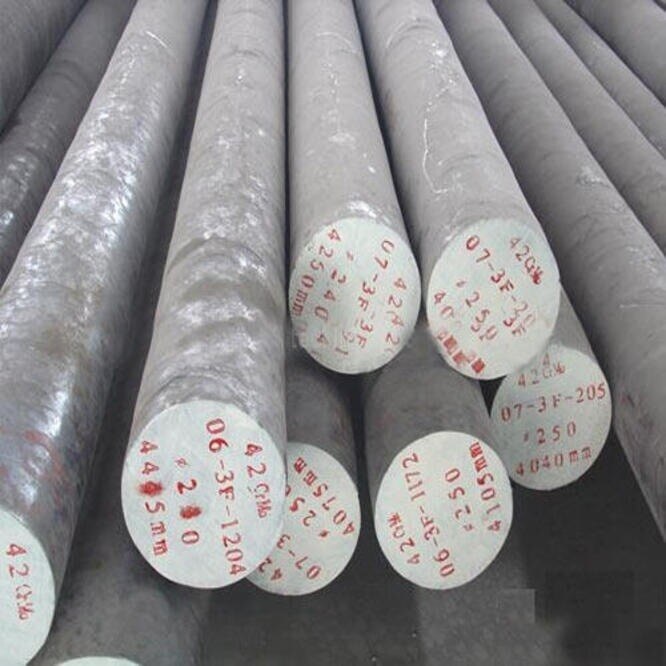
4. Before acceptance, match the heat number stamped or painted on every plate to the certificate and check thickness, width, length, flatness, surface defects and any UT report. Reject an untraceable plate.
Whether the quote comes from Steel Mart or another supplier, apply the same document-and-marking test to every IS 2062 plate in Chennai. Shortcuts create a certificate that describes steel you cannot prove is the steel delivered.
Related product
 | BQ and Wear Resistant Plates S235JR Carbon Steel Plate is a versatile structural steel plate widely used in construction, fabrication, infrastructure, engineering, and industrial... View product → |
Use heat traceability, welding controls and corrosion protection to close the risk
Reject any plate whose heat number cannot be matched from the plate marking to the mill test certificate (MTC). For an IS 2062 or S235JR carbon steel plate in Chennai, verify the ordered grade, quality subclass, thickness, delivery condition, impact-test temperature, dimensional tolerance and any UT class before unloading.
Use this receiving checklist:
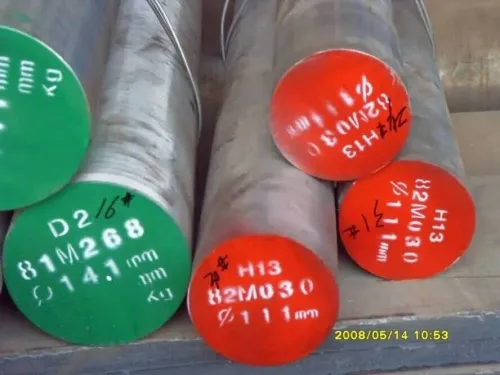
- Match every bundle tag and plate marking to the MTC heat number; quarantine mismatches.
- Check the MTC chemistry, yield strength, tensile strength, elongation and Charpy result against the purchase specification.
- Inspect thickness, width, flatness, lamination, edge damage and visible pitting; record measurements rather than accepting “standard tolerance.”
- Confirm the certificate identifies the applicable standard and inspection level, not merely “structural steel.”
For welding, calculate CEV from the certificate: C + Mn/6 + (Cr+Mo+V)/5 + (Ni+Cu)/15. Set preheat, interpass temperature, heat input and low-hydrogen consumable controls in the approved welding procedure, considering thickness, restraint and joint detail. A carbon-steel label does not prove crack-free welding.
Neither s235jr carbon steel plate in chennai nor an IS 2062 plate is corrosion-resistant by designation. Specify surface preparation, such as abrasive blast to Sa 2½, the compatible primer and topcoat, dry-film thickness, inspection points and repair method for damaged coating.
If galvanizing is selected, approve the process and venting details before fabrication; chloride, wet-dry cycles and industrial pollution will expose weak protection quickly.
Frequently asked questions
Are IS 2062 and S235JR carbon steel plates interchangeable?
No. IS 2062 is an Indian structural steel specification with multiple grades and quality subclasses; S235JR is an EN 10025-2 designation. Match the specified standard and evidence, not just nominal strength.
What should you compare when choosing between IS 2062 and S235JR?
Compare the ordered grade, plate thickness, chemical limits, mechanical properties, impact-test requirement and delivery condition. Confirm whether the project accepts the alternative standard before substituting it.
Which factors matter for plate selection in Chennai projects?
Check design loads, minimum service temperature, welded-joint requirements, plate thickness and exposure to humidity or salt. Select corrosion protection and welding controls for the actual site conditions.
What documents prove that a carbon steel plate complies?
Request the purchase specification, heat number, manufacturer’s test certificate, chemical analysis, tensile results, impact results where required, dimensional records and any third-party inspection report.