
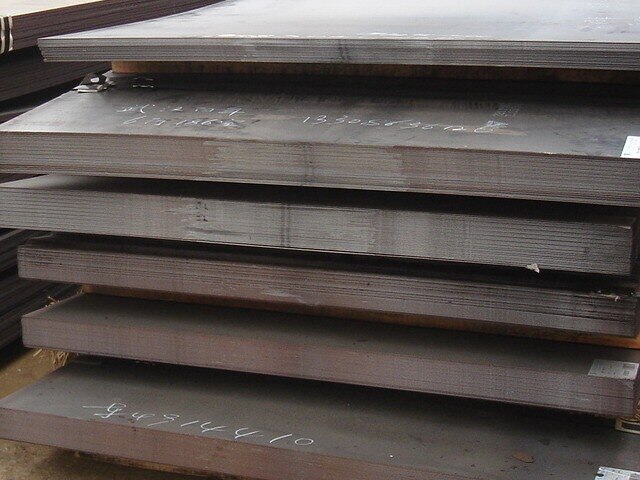
SAE 5160 earns its place in coil applications when high cyclic loading, impact, and section thickness make hardenability important, but the grade alone does not guarantee spring life. By checking the material form, forming route, heat treatment, fatigue risks, and certificate details, you can decide whether its durability justifies the added processing control.
Key takeaways
- Choose SAE 5160 for high cyclic loads, shock and through-hardening needs.
- Confirm coil thickness, width, condition, tolerances and traceability before ordering.
- Control forming and heat treatment to prevent cracking, distortion and permanent set.
- Compare SAE 5160 with 50CrV4 and EN 42J against fatigue requirements.
When SAE 5160 Is Worth the Extra Processing Control
Choose SAE 5160 when the spring must carry high cyclic loads and absorb shock without taking a permanent set. Its chromium content improves hardenability, helping thicker sections develop useful hardness through their depth after quenching rather than leaving a soft core.
- Choose SAE 5160 steel for coil stock when section thickness makes through-hardening important.
- Prefer it for suspension, agricultural, and other components exposed to repeated impact.
- Select it when fatigue resistance depends on a properly hardened and tempered spring, not on maximum hardness alone.
The trade-off is tighter processing control. The higher carbon content makes forming more demanding than with low-carbon steel, while quenching can create distortion or cracks if the temperature, agitation, or part geometry is poorly controlled. Decarburization at the surface can also reduce fatigue strength, even when the core meets the target hardness.
Do not treat 5160 as routine welding stock. Its hardenable heat-affected zone can become brittle and crack without an engineered procedure, controlled preheat and interpass temperature, suitable consumables, and post-weld treatment. If the design needs frequent welding, severe cold forming, or only light-duty loads, a lower-alloy spring grade may reduce manufacturing risk.
SAE 5160 earns its extra control when load, impact exposure, and section hardenability justify the added processing effort.
What You Are Actually Buying When You Order a Coil
A coil order buys continuous strip, not a finished spring assembly. You receive steel wound for transport and later forming; you do not receive a coil spring with its final diameter, load rate, heat treatment, or fatigue performance. Write “raw strip only—no formed spring assembly” in the purchase order.
1. Name the product as SAE 5160 strip or coil and state width, thickness, inside diameter, outside diameter, coil mass, length, and quantity. Add the delivery condition, such as annealed or spheroidized, instead of accepting “spring steel” alone.
2. Ask whether the spring steel coils are mill-produced coil or slit-and-recoiled stock. For slit material, specify burr height, edge cracks, edge dressing, camber, coil set, and thickness and width tolerances; slitting can add residual stress that changes forming and fatigue behaviour.
3. Require the heat number, material certificate, chemistry, mechanical condition, and decarburization result. A certificate confirms what arrived, not what the completed spring will withstand.
4. State that forming, austenitising, quenching, tempering, stress relieving, and shot peening are downstream operations unless the supplier explicitly includes them. Hardened coil is not a finished spring and can crack during tight-radius forming.
5. Separate any welding requirement from the coil specification. SAE 5160 is not routine mild-steel welding stock; a finished assembly needs an engineered welding and post-weld treatment procedure.
How Forming and Heat Treatment Decide the Result
Buy SAE 5160 coil in an annealed, spheroidized, or otherwise workable condition, form the spring, then harden and temper it. Forming hardened coil raises the load sharply and can cause edge cracking, poor radius control, and dimensional scatter.
Control the sequence, not just the nominal grade:
- Form, pierce, and trim before hardening; remove burrs that could become fatigue cracks.
- Austenitize using a qualified temperature-and-time schedule for the section size, while limiting decarburization and grain growth.
- Quench with the specified oil, agitation, and transfer time. Uneven cooling creates distortion; excessive severity increases quench-crack risk.
- Temper promptly after quenching to the specified hardness or mechanical-property range. “5160” alone does not define a reliable finished-spring hardness.
- Inspect hardness, dimensions, surface decarburization, and cracks after heat treatment. Shot peen only after final heat treatment and dimensional correction.
- Treat welding as an engineered operation: carbon and chromium create a hard, crack-sensitive heat-affected zone, so use qualified preheat, interpass control, consumables, and post-weld treatment.
| Route | Forming load and risk | Suitable use |
|---|---|---|
| Form before hardening | Lower load; heat-treatment distortion must be corrected | Tight radii and production springs |
| Form after hardening | High load; cracking and loss of dimensional control | Only where the design and process are specifically qualified |
The final tempered structure and intact surface, not tensile strength alone, determine service reliability.
How to Judge Fatigue Life and Compare Alternative Grades
A spring that survives 10 million cycles at one stress can fail quickly at a higher alternating stress. Compare the corrected operating stress, mean stress, coil curvature, wire or strip thickness, and stress concentration at hooks, bends, holes, and edges against fatigue data for the actual heat-treated condition.
| Grade | Chemistry and hardenability | Fatigue-life decision |
|---|---|---|
| SAE 5160 | About 0.56–0.64% carbon and 0.70–1.00% chromium; chromium improves hardenability in larger sections | Strong candidate when thickness demands through-hardening, provided quench and tempering produce the required structure |
| 50CrV4 | Vanadium-bearing chromium spring steel with different carbon and chromium limits | Do not treat a 50CrV4 spring steel coil as interchangeable; compare section hardenability, tempering instructions, and test data |
| EN 42J | Legacy designation with chemistry and condition requiring the original BS specification or certificate | Reject grade-only comparisons; identify the actual analysis and heat treatment before using an EN 42J spring steel coil |
Surface condition can decide the result after chemistry passes. Specify maximum decarburization depth, hardness profile, scale removal, roughness, edge condition, and inspection method. Slit-and-recoiled stock can add burrs, camber, edge cracks, and residual stress; each can become a fatigue origin.
Ask for fatigue testing or an S-N basis using your stress ratio, geometry, surface finish, and shot-peened condition. Verify phosphorus and sulfur limits, then qualify the complete forming and heat-treatment route rather than choosing the lowest coil price.
What to Verify Before You Choose a Supplier
Do not compare SAE 5160 coil quotations until every offer identifies the material, condition and inspection basis. Ask for a mill test certificate, preferably EN 10204 3.1 when your purchase specification requires it, showing the heat number, producing mill, applicable SAE or ASTM standard, heat analysis and delivery condition.
| Check | Accept | Reject |
|---|---|---|
| Certificate | Carbon 0.56–0.64%, chromium 0.70–1.00%, manganese 0.70–1.00%, silicon 0.15–0.35%, and phosphorus and sulfur within the stated limits | “Spring steel” description without heat analysis or standard |
| Traceability | Coil tags, packing list and certificate all carry the same heat number; mill identity is stated | Certificate cannot be tied to the offered coil |
| Dimensions | Thickness, width, inside and outside diameter, coil mass, length, flatness, camber and tolerances are written into the quotation | “As available” dimensions or missing mass and tolerance data |
| Origin and processing | Supplier states whether it is mill-produced coil or slit-and-recoiled stock, plus annealed, hot-rolled or cold-rolled condition | Slit material offered without burr, edge-damage or residual-stress controls |
| Surface quality | Limits for seams, laps, rolled-in scale, scratches, inclusions and edge cracks; agreed macroetch, ultrasonic or magnetic-particle inspection for critical springs | Visual approval alone for cyclic-duty parts |
Ask Steel Mart, or any SAE 5160 steel supplier in Indore, to quote these requirements line by line. Do not accept EN 42J or 50CrV4 as substitutes until chemistry, hardenability, section size and heat-treatment instructions are separately confirmed.
Related products
 | Steel Items Discover durability with our high-quality steel coils. Engineered for strength and versatility, our steel coils are the ideal solution for various... View product → |
 | Steel Products Steel Mart is engaged in offering Spring Steel. We are proud to establish ourselves among the leaders of market as Spring Steel supplier, spring... View product → |
Frequently asked questions
When is SAE 5160 spring steel coil worth choosing?
SAE 5160 is worth choosing when a spring must handle high cyclic loads, absorb shock and resist permanent set. Its chromium content improves hardenability, which helps thicker sections develop useful hardness through their depth after quenching.
What should you verify when ordering spring steel coils?
Verify the steel grade, coil thickness and width, delivery condition, dimensional tolerances, surface condition, quantity, heat or batch number, test certificates and material traceability. Confirm that the coil can be slit, straightened, formed and heat-treated for your part.
How do forming and heat treatment affect SAE 5160 spring steel?
Forming limits, bend radius, heating temperature, quenching practice and tempering control determine whether the finished spring develops cracks, distortion, uneven hardness or premature fatigue failure. Match the process to the section size and required final properties.
How does SAE 5160 compare with 50CrV4 and EN 42J spring steel coil?
Compare SAE 5160, 50CrV4 and EN 42J by hardenability, section thickness, fatigue loading, shock exposure, forming route, heat-treatment capability and required documentation. Choose the grade that meets the finished spring's performance and processing requirements rather than selecting by name alone.
Related products
 | Steel Items Supply of 50CRV4 SPRING STEEL COILS by STEEL MART Specification Chart of 50CRV4 SPRING STEEL COILS Grade can be submitted by STEEL MART on request... View product → |
 | Steel Items supply of en 42j spring steel materials by steel mart specification chart of en 42j spring steel materials grade can be submitted by steel mart on... View product → |
 | Stainless Steels EN 9 (C60) SPRING STEELS View product → |