
Choosing between these plates requires more than matching the Grade 70 label: SA-515 targets intermediate- and higher-temperature pressure-vessel service, while SA-516 addresses moderate- and lower-temperature service with improved notch-toughness provisions. By comparing specification scope, thickness-dependent properties, design temperature and mill-certification evidence, you can select the material that fits the vessel rather than treating the two grades as interchangeable.
Key takeaways
- Choose SA 516 Gr 70 when impact toughness and pressure-vessel service govern.
- Check chemistry, tensile results and thickness-specific values on the MTC.
- Confirm the design temperature before selecting SA 515 Gr 70 steel.
- Require heat numbers, plate dimensions and traceability records in the order.
SA-515 and SA-516: What the specification names actually mean
The practical distinction in sa 516 gr 70 versus sa 515 gr 70 is intended service, not simply strength. Both are ASME Section II, Part A material designations adopted from ASTM plate specifications, and neither designation describes a forging.
Confirm the ASME edition, ASTM specification, and ASTM A20 general requirements named on the purchase order and material certificate.
| Specification | Intended pressure-vessel service | Toughness and procurement meaning |
|---|---|---|
| SA-515 Grade 70 | Intermediate- and higher-temperature service | Do not treat the plate as low-temperature material without the required impact qualification |
| SA-516 Grade 70 | Moderate- and lower-temperature service | Provides the specification basis for improved notch toughness, but impact testing still depends on the ordered requirements |
SA 515 Gr 70 steel and sa 516 gr 70 steel can show overlapping Grade 70 tensile and yield values, but they are not automatically interchangeable in an operating vessel.
The specifications set different chemistry limits by thickness and analysis type, so compare the current carbon, manganese, silicon, and residual-element tables rather than matching only the strength results.
SA 516 does not automatically mean impact-qualified plate. Check the specified test temperature, absorbed-energy value, specimen orientation, and supplementary requirement. A substitution can also change heat-treatment condition, weld-procedure qualification, design-temperature compliance, and code approval. Obtain written engineering approval before replacing one specification with the other.
Compare Grade 70 chemistry and mechanical properties by thickness
A matching 70 ksi tensile result does not make the plates equivalent. Compare the specification limits for the delivered thickness, then review the heat analysis, product analysis and mechanical test results against the stated ASME edition.
| Property | SA 515 Grade 70 steel | SA 516 Grade 70 steel | What to verify |
|---|---|---|---|
| Carbon | Maximum 0.27% up to 1.5 in; 0.28% above 1.5 in | Maximum commonly listed as 0.27% | Use the current table and thickness band |
| Manganese | About 0.79–1.30% | About 0.85–1.20% | Confirm heat and product analysis limits |
| Silicon | About 0.13–0.45% | About 0.15–0.40% | Check the permitted range, not only the reported value |
| Phosphorus and sulfur | Each commonly limited to 0.035% | Each commonly limited to 0.025% | Lower limits affect the comparison |
| Tensile strength | 70–90 ksi (485–620 MPa) | 70–90 ksi (485–620 MPa) | Confirm the test direction and specification |
| Yield strength | Minimum 38 ksi (260 MPa) | Minimum 38 ksi (260 MPa) | Do not treat equal yield values as proof of interchangeability |
| Elongation | Typically 17% in 8 in or 21% in 2 in | Typically 17% in 8 in or 21% in 2 in | Apply the correct thickness and gauge basis |
- Check the A20 general requirements, current A515 or A516 edition, plate thickness, heat-treatment condition and impact-test requirement.
- Calculate carbon equivalent before approving welding substitution; revise the WPS when chemistry, thickness or restraint changes.
A516’s notch-toughness basis can impose impact testing where A515 does not. Verify that requirement separately.
Match the plate to temperature, toughness and oil-equipment duty
Design temperature decides the starting point: choose SA 516 Grade 70 for moderate- or lower-temperature service where notch toughness matters, and consider SA 515 Grade 70 for intermediate- or higher-temperature pressure-vessel service when its supplied condition meets the design basis.
| Option | Service intent | Toughness decision | Oil-equipment choice |
|---|---|---|---|
| SA 516 Gr 70 | Moderate- and lower-temperature pressure service | Prefer when low-temperature toughness governs; specify impact temperature, energy, and orientation when required | Suitable for vessels, drums, and separators only after code and purchase requirements are confirmed |
| SA 515 Gr 70 | Intermediate- and higher-temperature pressure service | Do not reject it solely because it is a high-temperature plate; verify any required impact qualification | Suitable when design temperature, heat treatment, code rules, and weld qualification align |
The practical choice in SA 516 Gr 70 versus SA 515 Gr 70 is not the shared Grade 70 strength designation. A substitution can alter chemistry limits, heat treatment, notch-toughness evidence, welding qualification, and the design-temperature basis. Obtain approval under the governing ASME vessel code before replacing the specified grade.
Check the purchase order against the actual duty:
- State the minimum and maximum design temperatures, including startup and shutdown conditions.
- Specify impact-test temperature, absorbed-energy requirement, specimen orientation, and the applicable supplementary requirement when toughness is essential.
- Confirm heat-treatment condition and weld procedure qualification for the selected plate.
- Require heat-number traceability, dimensional and surface acceptance, and ultrasonic examination only when the order invokes it; SA 516 does not include UT automatically.
Use the MTC and traceability records to screen the purchase
Accept the plate only when its physical identity matches the paperwork. A quotation for boiler quality plate in mumbai proves nothing by itself: require the exact ASME SA-515 or SA-516 specification, Grade 70, nominal thickness, specification edition, delivery condition, and inspection requirements.
Request an MTC that identifies the heat number and reports:
- The plate specification, grade, thickness, heat-treatment condition, and applicable ASME Section II, Part A edition
- Heat chemical analysis, including carbon and manganese, against the ordered specification
- Tensile strength, yield strength, elongation, and the thickness basis used for those limits
- Ordered impact results showing test temperature, absorbed energy, specimen orientation, and supplementary requirement
- Any specified ultrasonic examination, including the examination standard and acceptance class
- Surface condition, edge condition, dimensions, and permitted tolerances
Check the heat number stamped or painted on the plate against the MTC before cutting. Photograph the marking at receipt and record it on the receiving report; a generic mill certificate covering several heats is not adequate traceability.
Through fabrication, transfer that heat number to every cut part using an approved marking method, then link each part to the cutting plan, nesting record, weld map, and final inspection dossier. Keep substitution approvals and nonconformance reports with the job file.
If a cut piece loses its marking and no controlled transfer record identifies its heat, treat its material identity as unproven until resolved.
Turn a Mumbai quotation into an engineering-approved material order
Reject a quotation that says only “boiler quality plate in Mumbai.” Before approval, convert it into a purchase order that identifies the material, the inspection basis and the evidence required at receipt.
1. State ASME SA-516 Grade 70, the applicable ASTM/ASME edition, plate thickness, width, length, quantity and delivery condition. Cite ASTM A20 general requirements where applicable.
2. Require the quotation to name surface and edge condition, dimensional tolerances, heat-treatment condition and any supplementary requirements. Do not treat “normalized” or “pressure-vessel quality” as sufficient without the specified condition.
3. Require an MTC showing specification and grade, heat number, ladle chemical analysis, tensile strength, yield strength, elongation and heat treatment. Add impact-test temperature, absorbed-energy result and specimen orientation when the design requires notch toughness.
4. Specify ultrasonic examination separately, including the standard and acceptance level. SA-516 does not automatically include UT merely because the plate is intended for oil equipment.
5. Make delivery acceptance conditional on the plate heat number matching the MTC and markings remaining legible. Check thickness, dimensions, lamination indications, edge damage and surface defects before cutting.
Use this checklist with an SA 516 Gr 70 supplier in Mumbai, including Steel Mart, rather than approving stock from a catalogue label. Release material to fabrication only after procurement, inspection and engineering sign the certificate and traceability review.
Related products
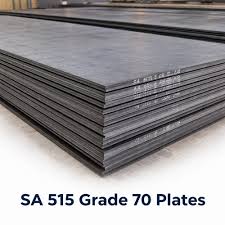 | BQ and Wear Resistant Plates SA 515 Gr 60-70 Boiler Quality Plate SA 515 Grade 60 / Grade 70 Boiler Quality Plate is a pressure vessel quality carbon steel plate manufactured under ASME SA-515 specifications. View product → |
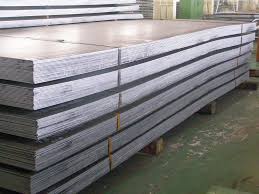 | BQ and Wear Resistant Plates SA 516 Gr 60-70 Boiler Quality Plate SA 516 Grade 60 / Grade 70 Boiler Quality Plate is a pressure vessel quality carbon steel plate designed for medium to low-temperature service. View product → |
Frequently asked questions
What do SA 515 and SA 516 mean?
They are ASME Section II, Part A material designations adopted from ASTM pressure-vessel plate specifications; neither designation describes a forging.
How do SA 515 Gr 70 and SA 516 Gr 70 differ?
Both are Grade 70 carbon steel plates, but SA 516 is intended for pressure-vessel service where improved notch toughness at lower temperatures matters. Compare the specified chemistry and mechanical requirements for the ordered thickness.
Which plate is better for oil equipment?
Use SA 516 Gr 70 when the equipment faces pressure-vessel duty or lower design temperatures requiring verified toughness. Select SA 515 Gr 70 only when its specification and the equipment design requirements are compatible.
What should an MTC show for SA 516 Gr 70 or SA 515 Gr 70?
Screen the certificate for the specification and grade, heat number, plate thickness, chemical analysis, tensile and yield results, elongation, test condition, dimensions and traceability to the supplied plates.