
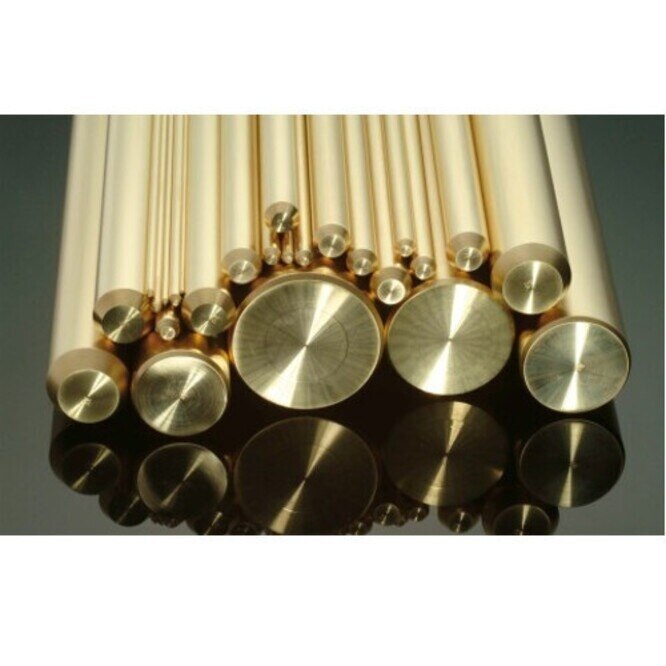
The choice between 080A47 and 070M55 affects cutting, welding, heat treatment, hardness and service life—not just the grade printed on a purchase order. By comparing their identities, certified chemistry, delivery conditions and fabrication risks, you can select the safer steel for a specific component and specify material that can be verified on arrival.
Key takeaways
- Treat 080A47 and 070M55 as distinct grades, not interchangeable names.
- Read the heat certificate before comparing strength, toughness or machinability.
- Control preheating, interpass temperature and cooling during welding.
- Specify grade, condition, size, standard edition and test documents when ordering.
080A47 and 070M55: what the designations actually mean
No: 080A47 and 070M55 are distinct legacy BS 970 carbon-steel designations, not interchangeable trade names. Their numerical portions broadly indicate about 0.47% carbon and 0.55% carbon respectively; they are guides, not substitutes for the applicable standard edition or heat certificate. The letter portions identify the designation family and chemistry controls.
That is the key issue in 080A47 versus 070M55 carbon steel.
| Grade | Carbon | Manganese | Silicon | Phosphorus and sulphur |
|---|---|---|---|---|
| 080A47 carbon steel | 0.45–0.50% | 0.50–0.80% | 0.10–0.40% | 0.05% maximum each |
| 070M55 carbon steel | 0.50–0.60% | 0.50–0.90% | 0.10–0.40% | 0.05% maximum each |
Do not confuse 080A47 with 080M40, which has different chemistry, or with C80, which uses another designation system. C45 and C55 provide useful modern comparison points, but approximate chemistry does not authorise substitution.
- Compare complete chemistry, delivery condition, section size and mechanical requirements.
- Check the applicable BS 970 edition or replacement specification against the mill certificate.
- Approve substitution only when the certificate and design requirements confirm equivalence; catalogue ranges alone do not.
How delivery condition changes strength, toughness and machinability
A certificate for 080A47 carbon steel is not interchangeable with a hardness result from another delivery condition. The same nominal grade can show materially different tensile strength, yield strength, hardness and elongation when supplied as-rolled, normalized, annealed or quenched and tempered.
| Condition | 080A47 carbon steel | 070M55 carbon steel |
|---|---|---|
| As-rolled or supplied | Balanced strength, ductility and machinability; impact performance depends on section and mill condition | Higher carbon raises strength and hardness, with less ductility and greater cracking sensitivity |
| Normalized | More forgiving machining and fabrication; useful balance of yield strength, elongation and toughness | Higher strength and hardness than 080A47, but lower impact tolerance and more demanding welding |
| Annealed | Lowest hardness and easiest turning, drilling and keyway milling | Improved machinability, but carbon-rich material still needs controlled cutting and tool wear monitoring |
| Hardened and tempered | Useful strength and toughness balance; final properties depend on tempering | Usually achieves higher as-quenched hardness and strength, then trades hardness for toughness during tempering |
Diameter changes the result. A small 070M55 sample can harden fully while a large shaft or round bar retains a softer core because cooling is slower at the centre. Specify section size, delivery condition, hardness range and mechanical test location rather than relying on catalogue values.
Carbon content also affects fabrication: hardened edges from flame cutting or heat-affected zones can accelerate tool wear, spoil surface finish and cause dimensional drift. Order 080A47 for easier machining, forming, welding and impact tolerance; choose 070M55 when hardened wear resistance outweighs those risks.
Welding and fabrication controls for each carbon steel
080A47 is the lower-risk choice for welded fabrication, but neither grade is weldable by grade name alone. The 080A47 versus 070M55 carbon steel decision must account for carbon equivalent, thickness, joint restraint, heat input and consumable hydrogen level; 070M55 demands tighter control because its higher carbon content increases hardening and hydrogen-cracking risk.
| Control | 080A47 | 070M55 |
|---|---|---|
| Fabrication risk | Lower, with better tolerance of ordinary welded details | Higher; use a more conservative qualified procedure |
| Restraint and thickness | Check both, especially in thick plates and rigid frames | Treat thick, highly restrained joints as high-risk |
| Consumables | Clean joint faces and use specified low-hydrogen consumables | Bake, store and use low-hydrogen consumables exactly as specified |
| Cooling and heat treatment | Controlled interpass temperature and slow cooling still matter | Tighter preheat, interpass, slow-cooling and post-weld controls may be required |
Do not copy a universal preheat temperature. Qualify the welding procedure for the actual carbon equivalent, thickness, restraint, heat input and consumable hydrogen level; it must set preheat, interpass temperature and any post-weld heat treatment. Control heat input to limit distortion without creating a hard heat-affected zone.
Remove oil, rust, moisture and scale from the joint.
Flame-cut edges on 070M55 can harden locally. Specify machining back, hardness checks or magnetic-particle inspection before welding when the edge enters the joint or carries restraint. A visually smooth bead proves appearance, not freedom from hydrogen-assisted cracking; inspect after the procedure’s specified delay, especially on repairs, brackets, plates, studs and restrained assemblies.
Repair welds require the same controls as original welds.
Match the grade and heat-treatment route to the component
Choose 080A47 carbon steel for a component that must machine, weld and absorb impact without demanding extreme hardness. Choose 070M55 carbon steel when hardened hardness, wear resistance or surface durability matters more than fabrication ease and crack risk.
| Component | Preferred choice | Treatment and control |
|---|---|---|
| Shafts and axles | 080A47 for impact and balanced machining; 070M55 for wear | Specify section-size results, not coupon hardness |
| Pins and studs | 080A47 for shock-loaded or welded parts; 070M55 for wear-loaded pins | State hardness range and inspect flame-cut or repaired zones |
| Gears and dies | 070M55 | Specify hardening, tempering and the finished hardness range |
| Brackets and plates | 080A47 | Prefer normalized or annealed stock where welding and forming dominate |
Normalizing refines grain and gives more uniform machining. Annealing lowers hardness for drilling, turning and keyway milling, but leaves the component softer. Hardening followed by tempering raises strength and wear resistance while restoring useful toughness; do not use an as-quenched condition without a defined engineering reason.
Achievable hardness depends on section size, steel chemistry, prior structure and quench severity. A small test coupon can harden fully while the centre of a large shaft, axle or round bar remains softer.
That is why the 080A47 versus 070M55 carbon steel decision must include diameter, treatment route and a hardness or mechanical result taken from the specified section. Through-hardening is an assumption, not a purchase requirement.
What to specify when buying round bar in Mumbai
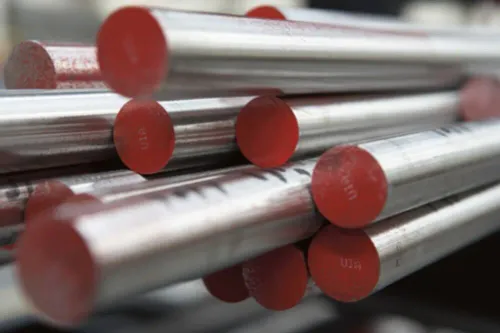
“080A47 round bar” is not a complete purchase description. For carbon steel round bars in Mumbai, put these details in the enquiry:
- Grade and applicable standard edition; do not approve C45 or C55 as automatic equivalents.
- Diameter, cut length, quantity and dimensional tolerance.
- Straightness limit and surface condition, such as peeled, turned, ground or as-rolled.
- Delivery condition: as-rolled, normalized, annealed, or quenched and tempered.
- Hardness range or mechanical requirements at the supplied diameter and condition.
- Forging allowance, machining allowance and any required cut-end condition.
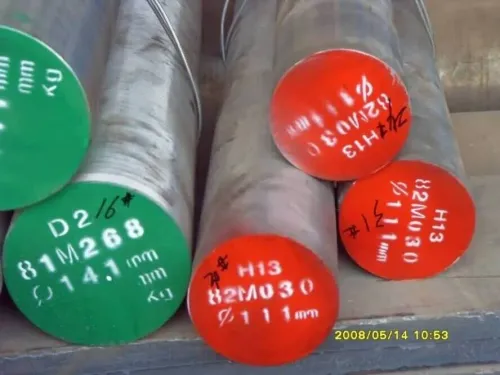
- Heat number and an EN 10204 3.1 certificate traceable to the supplied bars.
The certificate must report chemistry and mechanical results for the delivered heat and condition. A generic report for the same nominal grade does not prove that your bars came from that heat.
| Evidence | Specify or request | Why it matters |
|---|---|---|
| 3.1 certificate | Heat number, chemistry and mechanical results | Links test data to supplied bars |
| Ultrasonic testing | UT method, acceptance class and inspection stage | Prevents vague “UT tested” claims |
| Hardness testing | Location, section size and delivery condition | Exposes soft cores in large bars |
UT is not automatic commercial-bar documentation. Name it when shafts, forgings, heavy machining or cyclic loading justify internal-defect control. When comparing an 080A47 steel supplier in Mumbai, use this checklist to compare documented supply; Steel Mart can be considered when tested, certified stock must match these fields.
Approval rests on the specification, not the supplier name.
Related products
 | Steel Items STEEL MART is an ISO 9001-2015 company and it offers 070M55 CARBON STEEL 070M55 CARBON STEEL are used to by major Industrial Units 070M55 CARBON... View product → |
 | Steel Products steel mart is an iso 9001-2015 company and it offers 080a47 carbon steel 080a47 carbon steel are used to by major industrial units 080a47 carbon... View product → |
Frequently asked questions
Are 080A47 and 070M55 the same carbon steel?
No. They are distinct legacy BS 970 carbon-steel designations. Their numerical portions broadly indicate about 0.47% and 0.55% carbon, but they are not interchangeable without checking the applicable standard and heat certificate.
How does delivery condition affect 080A47 and 070M55?
The supplied condition changes strength, toughness and machinability. Compare the certificate’s chemical analysis, tensile results, hardness and stated heat-treatment or delivery condition rather than comparing grade names alone.
What welding controls matter for these carbon steels?
Set the welding procedure around section thickness, carbon content, restraint and heat input. Control preheat, interpass temperature and cooling, then inspect the joint using the required method.
What should you specify when buying carbon steel round bars in Mumbai?
State the exact grade, standard edition, diameter, length, quantity, delivery condition, permitted tolerances, test certificate requirements and traceability details. Confirm the supplier can identify each bar bundle by heat or batch.