
An EN8D quotation is incomplete when it gives only a grade name and diameter. You need to confirm the governing standard, chemical limits, delivery condition, mechanical results, dimensions, surface quality, testing and certificate details before comparing suppliers or releasing a purchase order.
Key takeaways
- Ask for the exact standard, edition and delivery condition on the quotation.
- Match mechanical properties to the bar’s stated heat-treatment condition.
- Specify diameter, length, tolerance and surface quality before pricing.
- Require inspection reports, test results, heat numbers and material traceability.
Confirm What the EN8D Grade Means on the Quotation
1. Do not accept a quotation that says only EN8D. Ask the supplier to state the exact standard number, edition, product specification and delivery condition. EN8D is historically associated with British Standard 080M40, and is commonly compared with C40, C45 and AISI 1040; these are approximate cross-references, not proof of identical chemistry.
2. Use the mill test certificate for the contractual limits. Commonly referenced EN8D steel chemistry is:
- Carbon: 0.38–0.43%
- Silicon: 0.10–0.40%
- Manganese: 0.60–0.90%
- Phosphorus: maximum about 0.05%
- Sulfur: maximum about 0.05%
Historical references, supplier datasheets and different standard editions can use different limits. Put the selected standard and edition, chemical limits and certificate requirement on the purchase order.
3. EN8D round bar is suited to shafts, pins, studs, axles, bushes, gears and similar general-engineering parts requiring medium-carbon strength and machinability. It is not a tool-steel substitute where high wear resistance or high as-quenched hardness is the priority, and it is not stainless steel for corrosion resistance.
For EN8D round bar specifications in Mumbai, require the quotation to identify the grade standard rather than relying on a familiar name. A matching designation alone does not establish matching composition, properties or suitability.
Tie Mechanical Properties to the Delivery Condition
Do not accept tensile, yield or hardness figures for EN 8D round bar until the delivery condition is written down. Hot-rolled, forged, normalized, untreated, annealed, cold-drawn, peeled, turned and quenched-and-tempered bars can produce different results; diameter, test direction and prior heat treatment change tensile strength, yield or proof strength, elongation and hardness.
- State the condition as a purchase requirement: “EN 8D steel, 80 mm diameter, normalized, longitudinal test direction, tensile strength 600–750 MPa, yield strength minimum 350 MPa, elongation minimum 18%, hardness 170–220 HB.” Replace those figures with the values required for your design and the applicable material specification.
- Keep property tables separate. Normalized, untreated, annealed and quenched-and-tempered results are not interchangeable, and a hardness value from a 25 mm bar does not establish performance in a 150 mm bar. Name the test standard, specimen direction, sampling location and acceptance range.
- Specify the surface-treatment objective separately. Induction or flame hardening can produce a wear-resistant surface with a tougher core, but case depth and surface hardness depend on carbon distribution, heating, quench severity, diameter and starting condition. Uniform through-hardening becomes substantially less predictable as section size increases.
- Treat welding as an engineering procedure, not a supplier promise. EN 8D can develop a hard heat-affected zone and hydrogen cracking; qualify the procedure for the actual section, including preheat, low-hydrogen consumables, interpass control and any post-weld treatment.
Specify Diameter, Length, Tolerance and Surface Quality
Put the finished-part diameter beside the ordered diameter, or the machining allowance will be guessed and the quotation will not be comparable. For EN8D round bar for specifications in Mumbai, record these points:
1. State the nominal diameter, supply condition, and whether you need full-length bars or cut-to-blank pieces.
2. Choose fixed lengths or random lengths. For cut pieces, state the cutting tolerance, end squareness requirement, and permitted length variation.
3. Specify maximum straightness deviation and roundness, not just diameter. State the permitted diameter tolerance and name the selected tolerance class; “close tolerance” is not an acceptance criterion.
4. Use EN 10060 for hot-rolled round-bar dimensions and tolerances. Use EN 10278 for bright steel bars, then identify the chosen class, such as h9 or h11, in the order.
5. Add the machining allowance required to reach the finished diameter. Hot-finished and forged bars need more stock than peeled or bright-drawn bars because scale, ovality, forging variation, and subsurface imperfections must be removed.
6. Define the surface: descaled, peeled, turned, or bright-drawn. A bright surface proves finish, not a forged route or soundness through the section.
7. Specify freedom from seams and laps, the maximum permitted decarburization depth and test method, plus rust-preventive oil and protected packing.
8. Replace “defect-free” with measurable acceptance: state the defect type, maximum size or depth, inspection method, and rejection level. Distinguish removable atmospheric staining from pitting; pits reduce usable diameter and are not ordinary staining.
Define Inspection, Testing and Traceability Before Dispatch
Request an EN 10204 Type 3.1 inspection certificate, not only a generic certificate of conformity. For EN 8D steel, the certificate should identify:
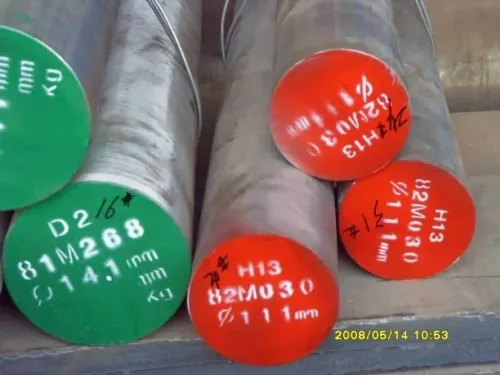
1. The heat number, product designation, dimensions, quantity, chemical analysis, delivery or heat-treatment condition, and the standards used for each test.
2. The tensile results, including yield or proof strength, tensile strength and elongation. Add hardness results when machining, hardening or wear performance depends on them; do not compare values from hot-rolled, normalized, annealed and quenched-and-tempered material as one set.
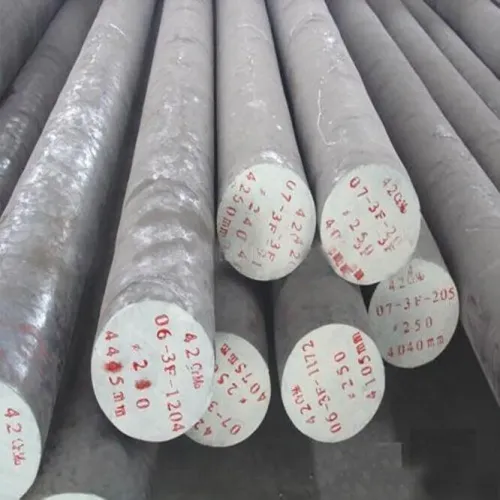
3. Match the heat number on the certificate with the bundle tag and delivery documents before unloading. A mismatch breaks traceability, even when the chemistry appears correct.
4. Use dimensional inspection to confirm diameter, length, straightness and tolerance. Use tensile testing for strength and ductility, hardness testing for local consistency or heat-treatment control, and ultrasonic testing for internal discontinuities in critical shafts.
5. Request macro-etch examination when you need evidence of segregation, porosity, inclusions or forging soundness through the section. For shafts and other high-consequence parts, specify ultrasonic testing and a documented acceptance level for seams or laps.
Impact testing is not automatic on a basic EN 8D order. Require it only when the component and service conditions justify it, after verifying the applicable test conditions; state the test temperature, acceptance value and test standard in the purchase order.
Compare an EN8D Supplier in Mumbai on the Same Product Definition
A ₹/kg quote is not comparable with a per-piece quote until you calculate both against the same EN 8D round bar quantity. Require each supplier to state the basis clearly.
| Basis | Quote must state | Why it matters |
|---|---|---|
| Per kilogram | Actual weighed mass or theoretical mass from dimensions and density | Actual weight changes the invoice; theoretical weight can hide cutting loss |
| Per piece | Number of bars, unit weight and length | A piece price is misleading when lengths differ |
| Full length | Standard mill length and quantity supplied | You may pay for stock that requires extra cutting |
| Cut length | Finished length, cut tolerance and number of pieces | Cutting time, kerf loss and shortfall become measurable |
| GST and freight | Included or extra, with delivery location | Mumbai delivery charges can change the landed price |
Send every EN 8D supplier in Mumbai the identical request: grade designation and standard, diameter, tolerance, length, delivery condition, surface requirement, certificate level and test plan. Require the quotation to identify whether cutting, straightening, machining, testing, end protection and rust-preventive oil are included.
Use the conversation with Steel Mart to confirm the stock or production route, heat traceability, forged or machined condition, bundle identification and protected packing. Also request an EN 10204 Type 3.1 certificate when the application requires verified heat and test results.
During storage, removable atmospheric staining is not the same as pitting. Wipe or prepare light staining; reject or investigate pits because they are measurable surface and dimensional defects.
Frequently asked questions
What should a quotation state besides EN8D?
Ask the supplier to state the exact standard number, edition, product specification and delivery condition. EN8D is historically associated with British Standard 080M40, while C40, C45 and AISI 1040 are approximate cross-references rather than proof of identical chemistry.
Why must mechanical properties be tied to delivery condition?
Mechanical properties depend on the bar’s delivery condition, such as untreated, normalized or quenched and tempered. Require the supplier to identify the condition and provide properties tested for that condition.
Which dimensions and finish details should you specify for EN8D round bar?
State the nominal diameter, required lengths, permitted diameter and length tolerances, straightness requirements, and surface condition. Clarify whether you need bright drawn, peeled, ground or hot-rolled material.
What inspection and traceability documents should you request?
Define the required inspection certificate, chemical analysis, mechanical test results, heat number, batch identification and test standard before dispatch. Ensure the markings and documents connect the delivered bars to the tested heat.
How can you compare an EN8D supplier in Mumbai fairly?
Send each supplier the same grade definition, dimensions, delivery condition, tolerances, surface requirements, testing documents and quantity. Compare quotations only after confirming that every supplier is pricing the same product.