
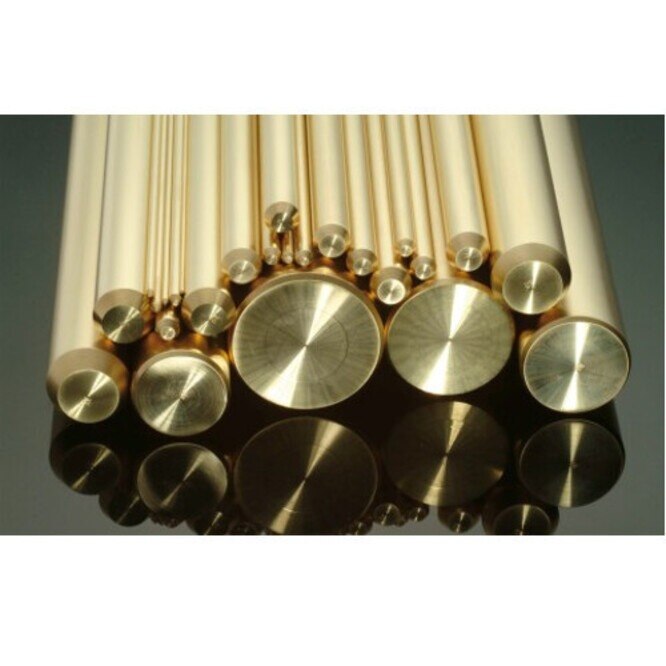
Premature fatigue fractures, permanent set, load loss and dimensional variation rarely come from the grade name alone. By the end, you will be able to connect each failure mode to material chemistry, forming practice, heat treatment, surface condition and inspection evidence, then decide whether 50CrV4 is the right corrective action.
Key takeaways
- Find tooling, design and heat-treatment causes before changing the steel grade.
- Chromium improves hardenability; vanadium refines grain and supports fatigue resistance.
- Control forming, austenitising, quenching and tempering to prevent coil failures.
- Verify chemistry, condition, dimensions and test certificates before production release.
Diagnose the coil failure before changing the steel grade
A failed spring steel coil needs evidence before a grade change. Replacing it with 50CrV4 spring steel for coil problems can hide a tooling, heat-treatment or design defect rather than remove the cause.
| Suspected cause | Evidence to collect | What it indicates |
|---|---|---|
| Material | Fracture-origin microscopy, hardness mapping across the section, chemical analysis, inclusion review and metallography | Inclusions, laps, seams, abnormal phases or a hardness gradient support a material or supply-condition problem |
| Design | Coil diameter, wire or strip dimensions, active-coil count, load test, operating stress and temperature | Permanent set with acceptable material points to excessive stress, insufficient coils, excessive initial stress or unsuitable service temperature |
| Forming | Crack location, tooling marks, bend-radius damage, surface tearing and samples examined before hardening | Cracks at contact points or tight radii implicate coiling; quenched-and-tempered stock can be too hard for this operation |
| Corrosion | Pit depth, rust distribution, deposits, exposure records and fracture-origin examination | A corrosion pit at the origin identifies an environmental crack starter, not automatically a weak grade |
| Processing | Austenitising, quench and temper records, decarburization measurement, grain size and dimensional checks before and after treatment | Soft zones, decarburized edges, coarse grain or inconsistent dimensions implicate processing |
Compare failed and acceptable coils from the same batch, then trace the fracture origin rather than testing only an undamaged area. 50CrV4 cannot prevent fatigue from sharp tool marks, pits or excessive operating stress when those defects remain.
What chromium and vanadium change in 50CrV4
Chromium increases 50CrV4’s hardenability, allowing quenching to produce a more uniform hardened structure through a coil’s section than a plain-carbon spring steel with similar carbon content. That reduces soft cores and load variation in larger wire or strip.
The nominal 0.90–1.20% chromium also supports strength after tempering, but the result depends on section size, quench severity and decarburisation control.
Vanadium forms stable vanadium carbides and helps restrict prior-austenite grain growth during correct heat treatment. Fine grains improve toughness and fatigue resistance; the carbides also contribute to wear resistance and tempering stability.
Do not treat vanadium as protection against overheating: excessive austenitising can dissolve more carbide than intended, coarsen the grain and leave the spring more vulnerable to notch-sensitive fatigue cracking.
A correctly processed 50crv4 spring steel coil can resist permanent set better than a lower-strength spring steel because it supports higher elastic stress before yielding. Its more uniform hardness also helps prevent local overload and premature fatigue fracture.
It does not rescue a design with too few active coils, excessive initial stress or operating temperatures outside the temper’s service range. Surface pits, tooling marks, inclusions and decarburised edges can still initiate cracks.
Compared with plain-carbon grades, 50CrV4 offers greater hardenability; compared with other alloy spring steels, its advantage depends on verified cleanliness, grain size, hardness and surface condition rather than the grade name alone.
Control forming, austenitising, quenching and tempering
Prevent failure by controlling the steel condition before forming and the temperature history after it. A 50CrV4 spring steel coil should enter forming with uniform hardness, straightness and surface condition; forming quenched or partially hardened stock concentrates strain and starts cracks at the inner radius.
- Form from the specified soft or spheroidized delivery condition, then verify hardness across the coil before production.
- Hold wire diameter, pitch, mean coil diameter and end geometry within the drawing; tight radii, uneven pitch and excessive springback create local stress concentrations.
- Keep coil spacing open during heating and quenching. Contact points and nested turns create shadowed surfaces, soft zones and dimensional distortion.
- Use a validated austenitising temperature, soak time and furnace atmosphere for the section size. Excessive temperature or soaking grows coarse prior-austenite grains; insufficient heating leaves undissolved carbides and low hardness.
- Protect the surface from decarburisation with controlled atmosphere or a suitable protective method, then measure the affected depth.
- Transfer rapidly into a quench with controlled agitation and uniform access around the coil. Severe or uneven cooling produces quench cracks, distortion and hardness gradients.
- Temper immediately after hardening at the specified temperature and time, then map hardness through the section and check free length, load and coil diameter.
| Control point | Failure prevented | Evidence to retain |
|---|---|---|
| Material condition | Forming cracks and inconsistent springback | Delivery hardness and dimensional records |
| Heat treatment | Soft zones, coarse grain and decarburisation | Furnace chart, atmosphere record and metallography |
| Quenching and tempering | Cracks, residual stress and permanent set | Quench record, hardness map and spring test results |
Specify and inspect 50CrV4 before it enters production
Reject the coil if its paperwork identifies only “50CrV4.” Your purchase specification must name the governing standard, grade designation, product form, dimensions and tolerances, delivery condition, chemical limits, hardness or mechanical properties, surface-quality limits, decarburisation allowance, internal-cleanliness level, and any ultrasonic or magnetic-particle inspection requirement.
State whether you will form the coil before hardening; annealed or spheroidize-annealed stock suits forming, while quenched-and-tempered stock can crack at tight radii.
1. Match the mill certificate to the order. Check the heat number, standard, product size, chemical analysis, delivery condition, hardness or tensile results, heat-treatment records and test methods. Confirm that EN 42J has not replaced 50CrV4 without comparing chemistry, section size, cleanliness, hardness and decarburisation limits.
2. Inspect the coil before release. Measure wire or strip thickness, width, ovality, camber and coil diameter; look for laps, seams, edge cracks, slivers, dents, scale, rust pits and handling marks. Record the heat number against each coil, not only the delivery lot.
3. Demand proof of surface integrity. A certificate’s tensile strength does not prove fatigue life. Require the agreed decarburisation test or metallographic cross-section, because a carbon-depleted layer can cause soft zones, load loss and early fatigue fracture.
4. Quarantine discrepancies. For 50crv4 spring steel for coil problems, require clarification before production if dimensions, condition, chemistry, cleanliness or inspection results do not match the order. Steel Mart can help procurement teams compare the certificate against the actual coil rather than accepting a generic grade label.
Related products
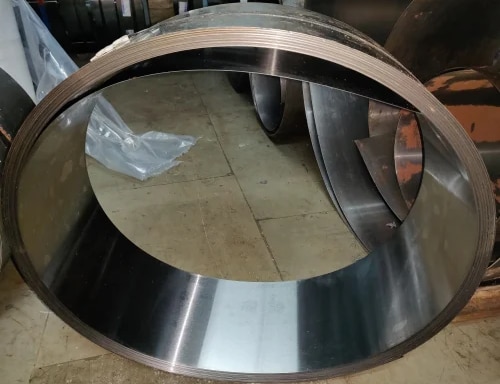 | Steel Items Supply of 50CRV4 SPRING STEEL COILS by STEEL MART Specification Chart of 50CRV4 SPRING STEEL COILS Grade can be submitted by STEEL MART on request... View product → |
 | Steel Products Steel Mart is engaged in offering Spring Steel. We are proud to establish ourselves among the leaders of market as Spring Steel supplier, spring... View product → |
Choose 50CrV4 or a different failure-control strategy
Choose a 50CrV4 spring steel coil when the design needs high fatigue strength, resistance to permanent set and more uniform through-thickness hardening than plain carbon steel can provide. Chromium improves hardenability; vanadium supports fine grain size and stable carbides. Neither alloy prevents failure from decarburised edges, inclusions, tooling marks, corrosion pits or excessive stress.
| Option | What it means | When it applies |
|---|---|---|
| 50CrV4 | Strong, hardenable alloy spring steel | Use for demanding cyclic loads, larger sections and resistance to permanent set |
| EN 42J (en 42j) | Silicon-manganese spring steel | Use for established designs needing good resilience without vanadium alloying |
| EN47 | Silicon-chromium spring steel | Use when higher hardenability and fatigue performance are needed in heavier sections |
| 55Si7 | Silicon spring steel | Use for high elastic limit at moderate section sizes and controlled heat treatment |
| SAE 5160 | Chromium spring steel | Use for tough, shock-loaded coils, especially where impact resistance matters |
| Plain carbon steel | Lower-cost, simpler spring material | Use for lightly loaded, smaller coils where fatigue demand and hardening depth are limited |
| Stainless spring steel | Corrosion-resistant spring alloy | Use when moisture, salt or chemical exposure controls life; accept different strength and forming limits |
| Shot peening | Compressive surface stress, not a grade change | Use after removing sharp marks and controlling decarburisation to improve fatigue life |
| Corrosion-resistant design | Drainage, coatings, sealed interfaces or material substitution | Use when corrosion pits, not bulk strength, initiate the cracks |
Do not select 50CrV4 to cure an overload. If the coil exceeds its elastic range, lacks active turns or operates at unsuitable temperature, redesign the spring. Specify decarburisation limits and verify them by metallography; a bulk certificate cannot prove surface integrity.
Frequently asked questions
Should you change to 50CrV4 after a spring steel coil fails?
No. Examine fracture surfaces, coil geometry, forming marks, hardness, heat treatment and design stress before changing grade. A grade change can hide the actual cause.
What do chromium and vanadium change in 50CrV4?
Chromium improves hardenability, while vanadium forms carbides and helps refine the prior-austenite grain. These effects support strength, toughness and fatigue performance when processing is controlled.
Which process stages require control when making 50CrV4 spring steel coils?
Control forming strain, austenitising temperature and soak, quench uniformity, and tempering temperature and time. Check hardness and distortion after treatment.
What should you inspect before accepting 50CrV4 for production?
Check the heat number, chemical analysis, mill test certificate, surface condition, dimensions, hardness, microstructure and any required tensile or fatigue test results.
When is a different strategy better than switching to 50CrV4?
Keep the existing grade when the failure comes from sharp tooling, excessive forming strain, incorrect heat treatment, surface damage, residual stress or an overstressed design. Fix that cause first.
Related product
 | Steel Items supply of en 42j spring steel materials by steel mart specification chart of en 42j spring steel materials grade can be submitted by steel mart on... View product → |