
Choosing between these plates starts with the governing design code, not a comparison of catalogue yield strengths. By the end, you can identify the correct material designation, interpret thickness and toughness requirements, and check whether a supplier’s documents support your pressure-equipment purchase.
Key takeaways
- Use SA 516 Gr 70 for pressure-vessel applications requiring its specification.
- Do not substitute S 275 without design-code and engineer approval.
- Check thickness, impact testing, heat treatment and chemical results on the certificate.
- Accept plate only against the pressure-equipment code and purchase specification.
Which specification actually describes the plate you need?
The governing code decides the plate: SA 516 Gr 70 is a pressure-vessel specification, while S 275 is a structural-steel designation. For SA 516 Gr 70 versus S 275 plate in Ahmedabad, do not treat stock availability or price as an engineering equivalence.
| Specification | Purpose and designation | Published strength and toughness |
|---|---|---|
| SA 516 Gr 70 | ASTM A516/A516M pressure-vessel plate for welded vessels; “SA” identifies adoption in the ASME Boiler and Pressure Vessel Code | Minimum yield strength 260 MPa; tensile strength 485–620 MPa. Impact testing depends on the ordered condition, thickness, supplementary requirements and governing code. |
| S275JR | EN 10025-2 structural steel; “275” identifies the nominal yield class | Yield strength is 275 MPa up to 16 mm and decreases with thickness; common-plate tensile strength is about 410–560 MPa. Charpy requirement: 27 J at +20°C. |
| S275J0 | EN 10025-2 structural steel | Same thickness-dependent yield system; 27 J Charpy energy at 0°C. |
| S275J2 | EN 10025-2 structural steel | Same thickness-dependent yield system; 27 J Charpy energy at −20°C. |
These are different acceptance routes, not interchangeable grade names. The JR, J0 and J2 suffixes state impact-test temperatures; they do not make S275 a pressure-vessel material. A plate marked S275 should not enter an ASME vessel, boiler or coded storage tank unless the responsible design authority documents material evaluation, code acceptance and traceability.
A strength-only comparison also fails: S275’s 275 MPa refers to yield strength, while SA 516 Gr 70’s “70” relates to its tensile-strength class.
How do strength, thickness and Charpy requirements compare?
A 70 ksi label does not mean 70 ksi yield strength. For SA 516 Gr 70, the commonly quoted minimum yield strength is 260 MPa (38 ksi), while tensile strength is 485–620 MPa (70–90 ksi). S 275 starts with a 275 MPa yield designation, so comparing the two headline numbers mixes yield and tensile properties.
| Grade | Minimum yield strength | Tensile strength | Charpy requirement |
|---|---|---|---|
| SA 516 Gr 70 | 260 MPa; thickness and edition affect acceptance | 485–620 MPa | Specify the ordered supplementary impact requirement and design metal temperature |
| S275JR | 275 MPa up to 16 mm; lower values apply as thickness increases | 410–560 MPa for common thicknesses | 27 J at +20°C |
| S275J0 | 275 MPa up to 16 mm; lower values apply as thickness increases | 410–560 MPa for common thicknesses | 27 J at 0°C |
| S275J2 | 275 MPa up to 16 mm; lower values apply as thickness increases | 410–560 MPa for common thicknesses | 27 J at −20°C |
For a real order, state thickness, test temperature, impact energy, heat-treatment condition and governing specification. A grade name alone does not select Charpy performance. SA 516 Gr 70 impact testing depends on the specified requirement; JR, J0 and J2 identify different S 275 toughness temperatures.
Do not substitute structural carbon steel plate because its published strength looks similar. Confirm the approved welding procedure, carbon equivalent, preheat, interpass temperature, consumables and hydrogen control for the actual thickness. A certificate listing only chemistry, yield and tensile results cannot prove pressure-vessel conformity.
Which pressure-equipment design code controls acceptance?
The governing code is set by vessel jurisdiction, design specification and certification route—not stock availability. For an ASME-coded vessel, use ASME BPVC Section VIII, Division 1 and order material that satisfies the applicable SA-516 requirements. A plate marked S275 needs documented material evaluation and responsible design-authority approval before pressure-boundary use.
That is the central decision in SA 516 Gr 70 versus S 275 plate in Ahmedabad.
| Route | Acceptance basis | When it applies |
|---|---|---|
| ASME Section VIII, Division 1 | ASME-listed material, permitted thickness and condition, design allowables, toughness and traceability | A vessel built and stamped to the ASME BPVC |
| EN 13445 | EN 13445-2 material designation or an accepted material assessment, plus EN 13445 design and fabrication rules | An unfired pressure vessel designed for the European route |
| EN 10025 | S275 conformity to EN 10025-2 for structural use | Frames, supports and non-pressure equipment outside a pressure-vessel code |
SA 516 Gr 70 is pressure vessel steel under ASTM A516/A516M and its ASME adoption, SA-516. S275JR, S275J0 and S275J2 belong to a structural standard; their room-temperature strength does not make them interchangeable with SA-516.
An EN 10204 type 3.1 certificate proves manufacturer-reported test results, not compliance with ASME Section VIII or EN 13445. Confirm the code, material listing or assessment, design metal temperature, thickness-dependent allowable stress, impact requirement and full heat traceability before accepting the plate.
What must you verify on the certificate before fabrication?
Do not release a carbon steel plate for fabrication until its certificate identifies the ordered specification, not merely a similar strength level. For pressure vessel steel, confirm SA-516 Grade 70 to ASTM A516/A516M or the applicable ASME SA specification; an S 275 marking is not an equivalent substitute.
| Document | Verify on the certificate | Why it matters |
|---|---|---|
| Material identity | Grade, specification and revision; plate thickness, dimensions and delivery condition | Separates SA-516 Grade 70 from S275JR, S275J0 or S275J2 |
| Heat treatment | Normalized, normalized-and-tempered, or stress-relieved condition, as ordered; record the treatment where required | Strength and toughness depend on the supplied condition |
| Chemical analysis | Heat analysis for carbon, manganese, silicon, phosphorus, sulphur and specified alloying elements | Chemistry alone cannot qualify one grade as another |
| Mechanical tests | Yield strength, tensile strength, elongation and test thickness or orientation | Published values change with thickness and test direction |
| Toughness and examination | Charpy results at the specified temperature, plus ultrasonic testing or other supplementary examination | Missing impact or UT evidence can expose a vessel to an acceptance failure |
| Traceability | Heat number on the certificate matching the plate stencil, tag and cutting record | Prevents certificates from being assigned to the wrong plate |
- Check that the certificate is an EN 10204 Type 3.1 document when ordered; that format confirms manufacturer test results but does not itself prove pressure-code approval.
- Record the plate heat number before cutting, and retain the original certificate with the fabrication dossier.
- Ask the design authority to approve any substitution and confirm the WPS, preheat and consumables against the actual grade.
How should Ahmedabad buyers make the final plate decision?
The lowest local quote is not the lowest project cost if the plate fails code review or requires requalification. For sa 516 gr 70 versus s 275 plate in ahmedabad, freeze the governing code, design temperature, thickness and toughness requirement before requesting comparable offers.
| Grade | Strength and toughness reference | Purchasing consequence |
|---|---|---|
| SA 516 Gr 70 | Minimum yield 260 MPa; tensile 485–620 MPa; impact testing depends on the ordered condition and code requirement | Pressure vessel steel with a documented pressure-boundary route |
| S275JR | Minimum yield 275 MPa up to 16 mm; tensile 410–560 MPa; 27 J at +20°C | Structural plate; do not treat room-temperature strength as vessel approval |
| S275J0 | Yield reduces with thickness; tensile range also changes; 27 J at 0°C | Structural option only when the design standard accepts it |
| S275J2 | Yield reduces with thickness; 27 J at −20°C | Better specified low-temperature toughness, but still not automatic pressure-vessel compliance |
Compare each offer against a written checklist:
- Confirm the exact grade, thickness, heat number, dimensions, heat treatment, chemistry, tensile and yield results, elongation, impact results and ultrasonic examination.
- Check whether the mill certificate identifies the required code material. An EN 10204 Type 3.1 certificate records manufacturer test results; it does not itself approve S275 for an ASME vessel.
- Price welding risk separately: unfamiliar material, extra procedure qualification, preheat control or rejected welds can erase a cheaper plate.
- Compare confirmed stock, cutting time, replacement lead time and delivery date, not a salesperson’s estimate.
Steel Mart can be asked to quote SA 516 Gr 70 and S275 as separate, certificate-backed options so your designer can approve the substitution basis before fabrication.
Related products
 | BQ and Wear Resistant Plates SA 516 Gr 60-70 Boiler Quality Plate SA 516 Grade 60 / Grade 70 Boiler Quality Plate is a pressure vessel quality carbon steel plate designed for medium to low-temperature service. View product → |
 | BQ and Wear Resistant Plates SA 515 Gr 60-70 Boiler Quality Plate SA 515 Grade 60 / Grade 70 Boiler Quality Plate is a pressure vessel quality carbon steel plate manufactured under ASME SA-515 specifications. View product → |
Frequently asked questions
Which specification describes the plate needed for pressure equipment?
SA 516 Gr 70 is an ASME pressure-vessel plate specification. S 275 is a structural-steel designation under EN 10025-2, so the equipment design and governing code must determine the correct plate.
How do SA 516 Gr 70 and S 275 compare on strength and Charpy requirements?
Compare the required thickness range, yield strength, tensile strength, elongation and impact-test temperature for the exact grade and delivery condition. Do not assume similar nominal strength makes the plates interchangeable.
Which design code controls acceptance of pressure-equipment plate?
The project’s governing code controls acceptance, such as ASME Section VIII, Division 1, together with the specified material standard and purchase requirements. Confirm the code edition and material listing before procurement.
What should you verify on the mill certificate before fabrication?
Match the heat number, plate dimensions, grade, delivery condition, chemical analysis, tensile and yield results, elongation, Charpy results where required, heat treatment and inspection certification to the purchase order.
How should Ahmedabad buyers make the final plate decision?
Give the supplier the design code, plate thickness, service temperature, impact requirement, dimensions and documentation standard. Select the plate that satisfies those conditions, not the one with the lower price or faster availability.
Related product
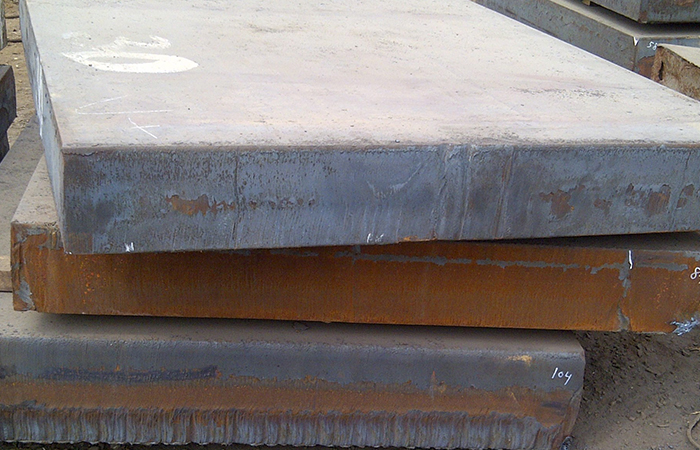 | BQ and Wear Resistant Plates Boiler quality plate is a subfamily of steel alloys designated for the manufacture of pressure vessels and pipelines. View product → |