
AISI 1010 can be a sensible material for welded supports, brackets, clamps and other non-pressure hardware, but its low carbon content does not make it a universal oil-and-gas grade. You will be able to separate acceptable fabrication uses from pressure-boundary applications, compare stronger alternatives and specify the documents needed before approving a heat or machined component.
Key takeaways
- Use AISI 1010 for low-stress hardware, not pressure-retaining boundaries.
- Confirm the governing ASME code before specifying AISI 1010 for petrochemical work.
- Compare weldability, strength and machining needs against AISI 1018, 1020, 1030 and 1045.
- Put grade, product form, heat number and test documents on the purchase order.
AISI 1010 fits fabricated hardware better than pressure boundaries
AISI 1010 is suitable for oil-and-gas fabrication in Bengaluru when the part carries low or moderate stress and does not retain pressure. Its low carbon content supports welding, bending and general fabrication, while its availability in common product forms helps with routine workshop work.
Suitable applications include:
- Equipment supports and baseplates
- Brackets, clamps and guards
- Non-pressure structural attachments
- Covers, frames and simple machined components
Do not treat AISI 1010 as an automatic choice for vessels, process piping, valves, flanges, tanks or wellhead parts. Use it there only when the governing specification explicitly permits the material and product form under ASME BPVC, ASME B31.3, an API product standard or the project specification.
Minimum design temperature, thickness, toughness, heat treatment and traceability can change the decision.
A qualified welding procedure still matters. Clean joints, controlled consumables and suitable inspection reduce cracking and distortion in thick or highly restrained fabrications; easy welding does not remove those controls.
Bengaluru’s humidity, monsoon exposure, condensation and chlorides can rust AISI 1010 because it is not corrosion-resistant. Specify dry covered storage, a temporary rust preventive, drainage or a coating system where exposure demands it.
For machined parts, confirm the supply condition and cutting plan: low-carbon steel can produce stringy chips, particularly when machining is compared with free-machining steel.
What its chemistry delivers—and where its limits begin
A carbon content of 0.08–0.13% makes AISI 1010 easy to weld, bend and cold-form, but it also limits strength, hardenability and wear resistance. The main AISI 1010 steel benefits are predictable fabrication behaviour and broad availability in bar, sheet, plate, tube and forged forms.
Its chemistry tells you what happens at the arc and press:
- Manganese is typically 0.30–0.60%, enough for basic strength and weldability without making the steel difficult to cut or weld.
- Phosphorus and sulfur limits come from the product standard. Excess sulfur can impair ductility and weld quality; poor inclusion control can create fatigue-sensitive defects.
- A commonly published annealed reference is about 305 MPa yield strength, 365 MPa tensile strength, 28% elongation and 105 HB hardness. Treat these as reference figures, not guaranteed values for every bar or plate.
Low hardenability means a weld heat-affected zone is less likely to form very hard martensite, reducing cracking risk during ordinary fabrication. The same trait means AISI 1010 is a weak choice for hardened pins, cutting edges, high-load shafts or serious abrasion.
The label does not establish toughness, cleanliness, dimensional tolerances or delivery condition. For oil-and-gas work, check the heat analysis, sulfur and phosphorus results, inclusion requirements, tensile and yield tests, elongation, hardness and product-form standard. AISI 1010 is also unalloyed, so humidity, chlorides and wet insulation require a specified coating or corrosion-control plan.
How AISI 1010 compares with 1018, 1020, 1030 and 1045
Choose AISI 1018 when AISI 1010 lacks strength and you still need straightforward welding, forming and machining. Choose 1020 for a modest strength increase; move to 1030 or 1045 only when the component needs substantially higher strength, hardness or wear resistance.
| Grade | Relative choice | Practical consequence |
|---|---|---|
| AISI 1010 | Lowest strength; easiest welding and forming | Suitable for light-duty brackets, covers and fabricated attachments; low-carbon stock can produce stringy chips |
| AISI 1018 | Best general step up | Higher strength than 1010 with good weldability, availability and more predictable machining |
| AISI 1020 | Moderate step up | Useful for shafts, pins and machine parts needing more strength while retaining weldability |
| AISI 1030 | Higher strength and hardness | Better for loaded components, but welding needs tighter heat control and may require preheat under the procedure |
| AISI 1045 | Highest strength and wear resistance in this group | Appropriate for shafts, pins and wear-prone parts; harder to weld and form, with greater cracking risk |
AISI 1018 is usually the sensible replacement when machining is the problem, but it is not a free-machining grade. If chip control dominates the decision, compare a specified free-machining grade such as 12L14 instead of assuming a higher carbon number solves it.
For sour service, do not select any of these grades by designation alone. Verify NACE MR0175/ISO 15156 or the project specification, including hardness, environmental limits, welding controls and any sulfide-stress-cracking tests. For pressure boundaries, the governing code and qualified material specification decide whether the grade is acceptable.
The code and product-form checks pressure work requires
Do not approve AISI 1010 for a pressure boundary from the grade name alone. For a vessel, process pipe, flange, fitting or tank, the governing design document must explicitly permit the material for its product form, thickness, design temperature and service.
1. Identify the governing requirement: ASME BPVC Section VIII for vessels, ASME B31.3 for process piping, the applicable API product standard, or the project material specification. Check its permitted material table rather than treating a bar, plate, pipe or forging as interchangeable.
2. Confirm the design conditions. Review minimum and maximum temperature, design pressure, wall thickness, required yield and tensile strength, impact toughness, weld procedure limits and heat-treatment condition. A code acceptance for one form or thickness does not transfer automatically to another.
3. Screen the service environment. AISI 1010 for petrochemical work is not intrinsically qualified for hydrogen-sulfide service; sour applications require NACE MR0175/ISO 15156 or project compliance, including hardness, environmental, welding and possible sulfide-stress-cracking controls.
4. Demand records for the actual heat and product: chemical analysis with sulfur and phosphorus values, mechanical-test results, hardness or impact results where specified, heat-treatment details, dimensions and traceability. A generic certificate for unrelated stock proves nothing about the part you will install.
For AISI 1010 for petrochemical work, reject the material when the code, client specification or service qualification does not name it. Use a separately approved grade instead of relying on a supplier’s claim that the chemistry is “equivalent.”
A purchase-order checklist for traceable AISI 1010 stock
Before the first cut, make the purchase order identify the exact material, not just “1010.” Ask the aisi 1010 low carbon steel supplier to attach these records and controls:
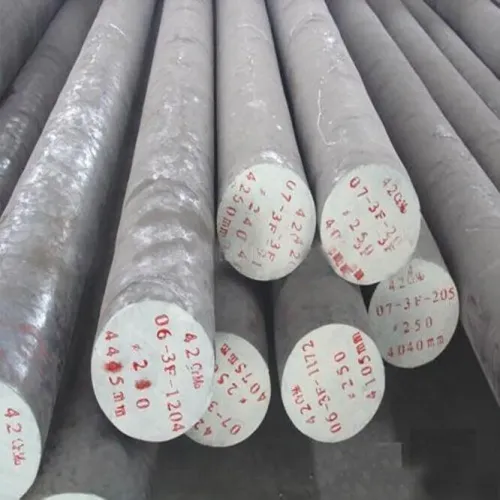
1. Product form and standard: bar, plate, sheet, tube, forging or bright bar, with the specified ASTM, ASME, EN or API requirement and size range.
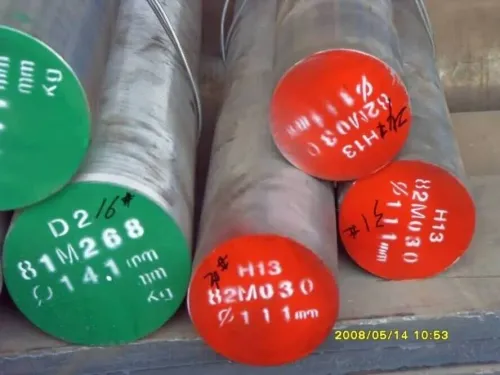
2. Heat traceability: the actual heat number marked on each bundle, piece or cut length, matching the material test certificate. A generic certificate from another lot is not acceptable.
3. Chemical analysis: carbon, manganese, sulfur and phosphorus results, plus any project limits for cleanliness, inclusions or restricted elements.
4. Mechanical evidence: tensile strength, yield strength, elongation and hardness where the purchase specification or design requires them. Request test locations and standard test methods.
5. Delivery condition: annealed, hot-rolled, cold-drawn, normalized or another stated condition. Request heat-treatment records when treatment affects machining, forming or weld preparation.
6. Dimensional control: ordered dimensions, permitted variation, ovality where relevant, straightness tolerance, surface condition and any machining allowance.
7. Processing traceability: require the heat number to survive cutting, marking, subcontract machining and shipment of remnants. Record which piece supplied each fabricated part.
8. Inspection documents: certificate, dimensional report and any agreed third-party or nondestructive examination report. Steel Mart can support this check by confirming the requested form, condition and traceability before dispatch.
Related products
 | Steel Items AISI 1010 LOW CARBON STEEL BARS Supply of AISI 1010 LOW CARBON STEEL BARS by STEEL MART Specification Chart of AISI 1010 Grade can be submitted by STEEL MART on request AISI 1010... View product → |
 | Steel Items SAE 1010 Low Carbon Bright Bar Supply of sae 1010 low carbon bright bar by steel mart specification chart of sae 1010 low carbon grade can be submitted by steel mart on request sae... View product → |
Frequently asked questions
Is AISI 1010 suitable for oil and gas fabrication in Bengaluru?
Use AISI 1010 for low- or moderate-stress fabricated hardware that does not retain pressure. Do not select it for a pressure boundary without confirming the governing design code, material specification and qualification requirements.
What are the main benefits and limits of AISI 1010 steel?
Its low carbon content supports welding, bending and general fabrication. Its limits include lower strength and hardenability than higher-carbon grades, so it is a poor choice when a component needs high load capacity, wear resistance or heat treatment.
How does AISI 1010 compare with AISI 1018, 1020, 1030 and 1045?
AISI 1010 prioritises weldability and forming. AISI 1018 and 1020 provide modestly higher carbon and strength, AISI 1030 offers a stronger heat-treatment response, and AISI 1045 suits higher-strength or wear-related duties but is harder to weld.
What must you verify before buying AISI 1010 for pressure-related work?
Check the governing ASME or project code, approved material specification, product form, dimensions, heat number, mill test certificate, chemical analysis and mechanical test results. Confirm that the supplied form and documentation match the design requirements.