
A plate with a similar yield or tensile strength is not automatically an acceptable substitute for a pressure-vessel material. By comparing the governing standards, thickness-dependent properties, impact requirements, design-code rules and purchasing documents, you can decide whether SA 516 Gr 70, S 275, S 355 or IS 2062 belongs on your equipment specification.
Key takeaways
- SA 516 Gr 70 is pressure-vessel plate; S275 is structural steel under EN 10025-2.
- Do not substitute S275 without the governing pressure-equipment code approving the material.
- Check subgrade, impact toughness, delivery condition, weldability and heat-treatment requirements.
- Demand the mill test certificate, heat number, traceability and inspection records before acceptance.
Which standard governs SA 516 Gr 70 and S 275?
SA 516 Gr 70 and S275 are not equivalent grades. SA 516 Gr 70 is an ASTM A516/A516M pressure-vessel plate designation used within ASME material practice; S275 is a non-alloy structural-steel grade specified under EN 10025-2.
| Grade or standard | Governing use | Yield-strength basis |
|---|---|---|
| SA 516 Gr 70 | Pressure-vessel plate | Minimum 38 ksi, about 260 MPa |
| S275 | Structural plate | 275 MPa up to 16 mm; 265 MPa above 16–40 mm; 255 MPa above 40–63 mm |
SA 516 Gr 70 normally has a tensile-strength range of 70–90 ksi, about 485–620 MPa. Confirm the applicable thickness, test direction, elongation gauge length and supplementary requirements on the material certificate; these details affect the reported result.
For S275, the 275 MPa figure applies only to the thinnest range. Check the exact EN 10025-2 thickness table before comparing a heavier plate, because its minimum yield strength decreases with thickness. S275JR, S275J0 and S275J2 also identify Charpy impact-test temperatures of +20 °C, 0 °C and −20 °C.
Therefore, the SA 516 Gr 70 versus S 275 plate in Bengaluru question cannot be answered from strength figures alone. The specifications serve different material classes and design purposes: one targets pressure equipment, while the other targets structural fabrication. Tensile or yield similarity does not establish pressure-equipment acceptance, toughness or code compliance.
What do S275JR, S275J0, S275J2, S355 and IS 2062 actually specify?
S275JR, S275J0 and S275J2 are not interchangeable labels: their suffixes specify Charpy impact-test temperatures of +20 °C, 0 °C and −20 °C respectively. The suffix is part of the purchase designation, not optional wording.
| Grade | What the designation specifies | Purchase consequence |
|---|---|---|
| S275JR | EN 10025-2 structural steel; Charpy tested at +20 °C | Do not order only “S 275”; state JR |
| S275J0 | EN 10025-2 structural steel; Charpy tested at 0 °C | Use when the design requires the J0 toughness level |
| S275J2 | EN 10025-2 structural steel; Charpy tested at −20 °C | The J2 test temperature does not make it pressure-vessel plate |
| S355 | Structural grade; minimum yield commonly starts at 355 MPa up to 16 mm and decreases with thickness | Higher yield strength does not establish pressure-equipment acceptance |
| IS 2062 E250 or E350 | Indian structural-steel specification | State the applicable quality class, such as A, B or C, where required |
S355J2 still remains an EN 10025 structural grade, not an automatic substitute for SA 516 Gr 70. Its “355” identifies a structural yield-strength class, while “J2” identifies the −20 °C Charpy temperature; neither states allowable stress, code approval or pressure-vessel suitability.
SA 516 Gr 70, S275, S355 and IS 2062 use different designation logic. A higher structural yield number does not prove pressure-equipment acceptance, toughness at your design temperature, allowable stress or welding compatibility. Compare the complete standard, suffix, thickness, delivery condition and test requirements before approving a substitution.
When does the pressure-equipment code approve the material choice?
Approval comes from the governing construction code, not from the plate marking alone. Before ordering, identify whether the equipment follows ASME Section VIII Division 1, EN 13445, or the specified Indian or client code.
The code review must confirm:
- Permitted-material tables
- Allowable stress at the design temperature
- Thickness limits
- Material grouping
- Supplementary requirements, such as impact testing or ultrasonic examination
An ASTM A516/A516M marking does not guarantee acceptance in every code. SA 516 Gr 70 is the safer starting point for pressure-retaining parts in vessels, boilers and tanks designed around ASME or another pressure-vessel code, but the engineer must verify the exact edition, product form and service conditions.
| Grade | Appropriate starting use | Approval condition |
|---|---|---|
| SA 516 Gr 70 | Pressure-retaining shell, head or nozzle | Listed by the governing pressure-equipment code and accepted at the design temperature and thickness |
| S275 | Non-pressure frame, support, platform or attachment | Engineer approves the structural grade and confirms it carries no pressure boundary function |
| IS 2062 | Indian structural fabrication and supports | Engineer approves the specified grade and quality class for the attachment or structure |
An unapproved substitution can trigger inspection rejection, redesign, additional testing or complete replacement. A cheaper S275 or IS 2062 plate can therefore cost more than it saves once engineering approval, welding qualification and schedule delays are included.
Which welding, toughness and delivery conditions must be checked?
A technically accepted plate can still fail in fabrication or service if its heat chemistry, toughness and delivery condition do not match the design. Compare the material choices before welding:
| Grade | Primary check | Consequence |
|---|---|---|
| SA 516 Gr 70 | Pressure-vessel code acceptance and heat-specific weldability | Do not infer equivalence from tensile strength |
| S275 or S355 | Structural-grade grouping and code acceptance | Structural status does not permit pressure use |
| IS 2062 | E250/E350 grade and quality class A, B or C | Quality class changes impact and delivery requirements |
Review the actual heat chemistry, carbon equivalent and plate thickness, then apply the qualified welding procedure. Confirm hydrogen-control practice, electrode storage, preheat and interpass limits, and any post-weld heat treatment.
Changing from SA 516 Gr 70 to S275, S355 or IS 2062 can change material grouping, welding controls and code calculations even when tensile strength appears similar.
Select Charpy test temperature and energy for the design temperature, not the grade name. Treat corrosion allowance as a design input; do not infer it from the grade.
Put these items in the purchase order and certificate:
- Normalized or normalized-rolled delivery condition
- Charpy results, required ultrasonic-testing class and surface-quality class
- Nominal thickness, thickness limits, dimensions and dimensional tolerances
- Heat number, certificate traceability and the applicable welding requirements
The engineer must approve the complete substitution before fabrication, not after plates arrive.
What should a Bengaluru buyer demand before accepting the plate?
A SA 516 Gr 70 versus S 275 plate in Bengaluru purchase becomes traceable only when the order identifies the material and its delivery evidence precisely. Put these requirements in the purchase order:
1. State the exact standard and edition, grade and suffix, nominal thickness, plate dimensions, delivery heat treatment, surface condition and dimensional tolerances. Name SA 516 Gr 70, S 275, or IS 2062 with its applicable quality class; do not leave the grade to a quotation.
2. Require the heat number and plate number to appear on the plate, packing and manufacturer’s material test certificate. The certificate must show chemical analysis, yield strength, tensile strength, elongation, test direction and gauge length.
3. Specify the Charpy impact-test temperature and minimum energy, plus supplementary tests such as ultrasonic testing, if required by the code or project specification.
4. State the EN 10204 document type. A 3.1 certificate reports the manufacturer’s specific inspection results; a 3.2 certificate adds validation by an authorized inspection representative or purchaser representative when the project requires it.
5. Ask for confirmed stock availability, cut-to-size lead time, third-party inspection arrangements, replacement of damaged or out-of-tolerance plates, and the lifting and transport method.
6. Inspect surface condition and require protection from Bengaluru rain, standing water and contamination. Preserve heat-number identity after cutting.
Steel Mart can support this decision with tested, traceable stock materials when the purchase order states the complete requirement. Reject offers described only as “boiler plate” or “structural plate.”
Related products
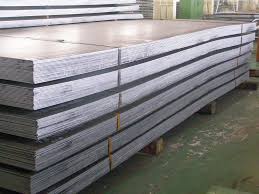 | BQ and Wear Resistant Plates SA 516 Gr 60-70 Boiler Quality Plate SA 516 Grade 60 / Grade 70 Boiler Quality Plate is a pressure vessel quality carbon steel plate designed for medium to low-temperature service. View product → |
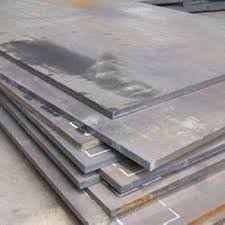 | BQ and Wear Resistant Plates SAILMA 540 Carbon Steel Plate is a high-strength low-alloy structural steel plate developed for demanding engineering and fabrication applications. View product → |
Frequently asked questions
Which standard governs SA 516 Gr 70 and S275?
SA 516 Gr 70 is designated by ASTM A516/A516M and used within ASME material practice. S275 is specified as a non-alloy structural-steel grade under EN 10025-2.
What do S275JR, S275J0, S275J2, S355 and IS 2062 specify?
S275JR, S275J0 and S275J2 identify S275 strength grades with different Charpy impact-test temperatures. S355 is a higher-yield-strength structural-steel family. IS 2062 specifies hot-rolled medium- and high-tensile structural steel grades for general structural use.
When does a pressure-equipment code approve the material choice?
Use a plate only when the governing design code lists or permits its material specification, grade, product form, thickness and required design values. A similar tensile strength does not make S275 an automatic substitute for SA 516 Gr 70.
Which welding, toughness and delivery conditions must be checked?
Check the approved material specification, thickness-dependent properties, Charpy impact temperature, carbon equivalent or weldability limits, welding procedure qualification, normalised or controlled-rolled condition, and any required heat treatment.
What should a Bengaluru buyer demand before accepting the plate?
Demand the purchase specification, original mill test certificate, heat number, plate identification, chemical and mechanical results, impact-test results when required, delivery condition, inspection certificate and traceability records.