
Boiler drums, headers, deaerators and other pressure vessels do not share the same material, temperature or inspection requirements. By separating pressure-retaining parts from tubes, furnace components and structural supports, you can specify SA 516 Gr 70 plate, documentation and fabrication controls without treating the grade number as a complete design approval.
Key takeaways
- Use Grade 70 for code-approved welded pressure-retaining parts.
- Check design temperature, thickness, stress limits, and welding requirements first.
- Require mill test certificates, heat traceability, and inspection records.
- Compare suppliers on material control, cutting, testing, and documentation.
Which Bengaluru boiler components use SA 516 Gr 70 plate?
SA 516 Gr 70 boiler plate uses centre on welded, pressure-retaining parts, not every steel item in a boiler plant. In Bengaluru equipment, the design and code may accept it for these fabricated components:
| Component | Typical plate application | Pressure-boundary role |
|---|---|---|
| Boiler drum or mud drum | Cylindrical shell and end plates | Retains water, steam or sludge |
| Steam header or manifold | Header body, heads and nozzle reinforcement | Distributes pressurised steam |
| Steam accumulator | Shell courses and formed heads | Stores pressurised steam |
| Deaerator or feedwater vessel | Shell, heads and nozzle pads | Contains treated feedwater |
| Economiser header | Header body and end plates | Collects or distributes feedwater |
| Auxiliary pressure vessel | Shell, heads and reinforced openings | Depends on the vessel design |
Use Grade 70 for pressure-retaining walls, heads and nozzle reinforcement only when the construction code, thickness, temperature and service conditions accept welded pressure-vessel plate. Structural frames, platforms, ladders and supports do not become pressure parts merely because they stand beside a boiler.
Boiler tubes, superheater tubes and economiser tubes normally need dedicated tube specifications for heat-transfer duty. Furnace walls, refractory supports and abrasion liners require materials selected for temperature, oxidation, thermal cycling or wear instead.
Grade 70 is carbon-manganese pressure-vessel plate, not stainless or alloy steel, and it is not inherently corrosion-resistant. Manage feedwater chemistry, wet steam, chlorides, oxygen ingress and shutdown moisture through:
- Water treatment, drainage, inspection access and corrosion allowance
- Lining, cladding or another alloy where corrosion or temperature justifies it
Geometry, pressure-boundary status and service conditions determine the final selection.
What design information determines whether Grade 70 is suitable?
Grade 70 is suitable only after the pressure boundary, temperature range, toughness demand and construction code have been checked. For SA 516 Gr 70 plate for applications in Bengaluru, provide the following design information:
1. State design pressure, design temperature, minimum design-metal temperature, vessel diameter, required thickness, corrosion allowance and weld joint efficiency.
2. Describe cyclic duty, including startup and shutdown frequency, rapid temperature changes and pressure cycling. Identify the code classification of each component, such as ASME Section VIII or Indian Boiler Regulations, 1950.
3. Treat the 70 designation as a strength grade, not an allowable design stress or a guarantee of impact toughness. The specified minimum tensile range is 70–90 ksi (485–620 MPa), and minimum yield strength is 38 ksi (260 MPa); do not use the yield minimum directly as the allowable stress.
4. Specify Charpy impact testing when low-temperature startup, outdoor exposure, rapid transients or other notch-sensitive service applies. Confirm the governing code and the applicable SA-516/A-516 edition because mechanical-property tables and supplementary requirements are edition-specific.
5. Write SA-516, the edition, product form, thickness, delivery condition and supplementary requirements into the order. Choose normalized, normalized-and-tempered, or quenched-and-tempered supply to suit forming, welding and the fabrication plan.
6. Request a mill test certificate showing chemistry, heat number, thickness, tensile and yield results, elongation, required impact tests and complete traceability. A quotation stating only “Grade 70” is incomplete.
How does SA 516 Gr 70 compare with other boiler materials and specifications?
The label determines code acceptance, not just strength. ASTM A516 Grade 70 and ASME SA-516 Grade 70 describe closely related carbon-steel pressure-vessel plate, but they are not interchangeable on every project.
If ASME construction is specified, name SA-516, the applicable edition, Section II material certification, product form, delivery heat treatment and supplementary requirements in the purchase order.
| Material or specification | Main distinction | Check before selection |
|---|---|---|
| ASTM A516 Grade 70 | ASTM pressure-vessel plate designation | Whether the code accepts ASTM material |
| ASME SA-516 Grade 70 | ASME-listed material route | Edition, Section II certification and traceability |
| SA-515 Grade 70 | Carbon plate associated with elevated-temperature service decisions | Design temperature, allowable stress and code tables |
| IS 2002 grades | Indian pressure-vessel steel grades | Indian Boiler Regulations approval and material requirements |
| SA-299 | Carbon-manganese pressure-vessel plate | Toughness, thickness range, welding procedure and code status |
| SA-387 alloy plate | Chromium-molybdenum alloy plate for higher-temperature duty | Alloy content, heat treatment, welding and PWHT |
| Boiler tube grades | Tubular materials for heat-transfer surfaces | Tube specification, temperature capability and heat-transfer duty |
A plate can meet tensile and yield requirements yet fail because its delivery heat treatment is unsuitable, Charpy tests are missing, the ordered thickness is outside the approved range, or the code will not accept its certificate. Grade 70’s 38 ksi minimum yield strength is not an allowable stress.
For sa 516 gr 70 plate for power equipment, select the final material using pressure, temperature, joint efficiency, corrosion allowance, transients and approval route.
What fabrication and inspection controls turn plate into an acceptable pressure part?
An acceptable pressure part is created by controlled fabrication, inspection and code documentation, not by the plate grade alone. Use this sequence:
1. Verify the SA-516 designation, edition, heat number, thickness, delivery condition and mill certificate before cutting. Mark every cut piece so its heat traceability survives nesting and fabrication.
2. Cut without introducing unacceptable burning damage or distortion. Machine or grind thermally affected edges, remove laminations and prepare bevel angles, root faces and backing details to the approved welding procedure specification.
3. Form shells, heads and plates within the qualified forming limits. Record forming temperature, bend radius and any required post-forming inspection; excessive cold strain can alter dimensions and properties.
4. Control fit-up, alignment, root gap, tack welds and restraint before welding. The qualified WPS and procedure qualification record must establish preheat, interpass temperature, heat input, consumable hydrogen control and welding sequence for that thickness and joint.
5. Keep electrodes and fluxes dry under controlled storage and rebake them when the consumable procedure requires it. Moisture, excessive restraint and hydrogen-control failures can cause delayed cracking in thick welds.
6. Apply PWHT or stress relief only when required by the governing construction code, material group, thickness, joint details, service and approved procedure. Normalized Grade 70 plate does not automatically remove that requirement.
7. Complete visual, dimensional and specified non-destructive examination, such as ultrasonic, radiographic, magnetic-particle or liquid-penetrant testing, before hydrostatic testing. Test pressure, hold time and acceptance criteria must come from the applicable code.
For ASME Section VIII equipment, follow the specified ASME construction route; equipment governed by the Indian Boiler Regulations, 1950 needs the applicable Indian approval and inspection-authority acceptance. Retain material certificates, heat traceability, forming and welding records, WPS/PQR documents, welder qualifications, PWHT charts, NDT reports and hydrotest results.
Without those records, a compliant plate can remain unusable.
How should you evaluate a SA 516 Gr 70 supplier in Bengaluru?
A credible sa 516 gr 70 supplier in bengaluru must prove control after the plate leaves the mill, not merely show stock. Ask for the required thickness, dimensions or cut sizes while preserving the original heat number on every piece and remnant.
| Check | Evidence to request | Reject when |
|---|---|---|
| Identity and certification | Original mill test certificate showing SA-516 or ASTM A516 designation, edition, chemistry, tensile and yield tests, elongation, thickness, delivery heat treatment and heat number | The certificate is a copy without traceability, or says only “Grade 70” |
| Inspection | Ultrasonic examination, Charpy impact results, surface inspection and dimensional reports when the project specification calls for them | Required tests or inspection records are absent |
| Processing | Cutting method, distortion controls, edge-quality criteria and remnant marking procedure | Cut pieces are mixed by heat, edges are unacceptable, or remnants lose identification |
Make the quotation state these procurement points explicitly:
- SA-516 versus ASTM A516, applicable edition, product form and delivery condition: normalized, normalized-and-tempered, or quenched-and-tempered.
- Supplementary requirements, code of construction, inspection documents, cut-size capability and delivery of original traceability.
- Reject mixed-heat, re-rolled or untraceable plate for coded boiler work unless the approving engineer and inspection authority accept a documented alternative.
- Steel Mart may suit a Bengaluru team sourcing tested, certified forged or machined stock alongside plate, but judge the quotation against the project specification, not the supplier name.
- Before fabrication, have the design engineer confirm code acceptance, the fabricator confirm WPS/PQR and code-based PWHT decisions, and inspectors reconcile each cut piece with its mill heat.
Related product
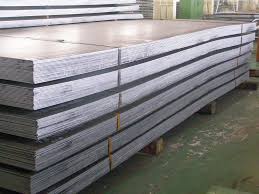 | BQ and Wear Resistant Plates SA 516 Gr 60-70 Boiler Quality Plate SA 516 Grade 60 / Grade 70 Boiler Quality Plate is a pressure vessel quality carbon steel plate designed for medium to low-temperature service. View product → |
Frequently asked questions
Which Bengaluru boiler components use SA 516 Gr 70 plate?
Designs commonly specify it for welded drums, shells, headers, steam separators, and other pressure-retaining fabricated parts when the governing code permits it.
What design information determines whether Grade 70 is suitable?
Check the applicable code, design pressure, metal temperature, corrosion allowance, plate thickness, allowable stress, weld joint efficiency, and impact-test requirements.
How does SA 516 Gr 70 compare with other boiler materials and specifications?
Grade 70 differs from lower-strength pressure-vessel grades, elevated-temperature alloys, stainless steels, and specifications such as SA 515 through strength, toughness, temperature capability, chemistry, and inspection requirements.
What fabrication and inspection controls turn plate into an acceptable pressure part?
Control heat identification, cutting, forming, preheat, welding procedure qualification, welder qualification, post-weld heat treatment, dimensional checks, NDT, hydrotesting, and final records.
How should you evaluate a SA 516 Gr 70 supplier in Bengaluru?
Request the applicable ASTM or ASME material certificate, heat and plate traceability, chemical and mechanical results, impact-test data when required, inspection reports, and evidence of controlled processing.