
The choice depends on more than nominal grade: carbon content, delivered condition, section size, welding method and the strength required in service all change the result. By the end, you will be able to select the better grade, identify when a nearby grade is safer, and write a purchase enquiry that prevents unsuitable bar stock from reaching production.
Key takeaways
- Choose AISI 1010 for forming and welding; choose AISI 1035 for higher strength.
- Confirm carbon, manganese, phosphorus, sulfur, size, form, and heat-treatment condition.
- Specify welding procedure, machining condition, storage protection, and inspection documents.
- Compare AISI 1020, 1040, IS 1570, ASTM A29, and EN 10083-2 when suitable.
Which grade fits the part: AISI 1010 or AISI 1035?
Carbon content separates the grades: AISI 1010 contains about 0.08–0.13% carbon and 0.30–0.60% manganese, while AISI 1035 contains about 0.32–0.38% carbon and 0.60–0.90% manganese. Phosphorus and sulfur limits must be confirmed against the ordered standard and heat analysis; common maximums are approximately 0.040% phosphorus and 0.050% sulfur.
| Grade | Approximate chemistry | Practical fit |
|---|---|---|
| AISI 1010 | 0.08–0.13% C; 0.30–0.60% Mn | Easy forming, welding and low-strength parts |
| AISI 1035 | 0.32–0.38% C; 0.60–0.90% Mn | Higher-strength machined parts and heat-treatment response |
The extra carbon in AISI 1035 raises as-rolled yield strength, tensile strength and hardness, but reduces ductility and weldability compared with AISI 1010. That difference matters more than the grade name when you are choosing AISI 1035 or AISI 1010 steel bars in Chennai for a production part.
Choose AISI 1010 for formed brackets, low-strength components, welded fabrications and parts where easy forming matters. Choose AISI 1035 steel bars for shafts, pins, studs, axles and moderately loaded machined parts needing greater strength or heat-treatment response.
Neither grade is a default choice for severe wear, corrosion exposure, high-load shafts or demanding fatigue service without a specified treatment or upgraded alloy. AISI 1035 remains less hardenable through the section than alloy steel such as 4140.
How do heat treatment and product form change the decision?
No: an AISI 1035 bar is not automatically stronger or more suitable than 1010. Hot-rolled, normalized, annealed, cold-drawn and quenched-and-tempered conditions can change strength, hardness, residual stress and machinability more than the grade label alone.
- Normalize 1010 or 1035 for a more uniform structure and moderate strength. This gives more consistent machining than heavily stressed stock.
- Anneal either grade when maximum softness and machinability matter. Soft 1010 can still produce long, stringy chips.
- Quench and temper 1035 when you need a defined combination of strength and toughness, not merely a higher hardness number.
- Use induction hardening when a hard wear-resistant surface is needed. 1010 has low hardenability and normally forms only a shallow hardened layer; 1035 penetrates farther but still has limited through-hardening compared with AISI 4140.
- Choose carburized 1010 for a hard case with a softer, tougher core. Carburized 1035 provides a stronger core with less case-to-core contrast.
Hardness is meaningless without bar diameter, austenitising practice, quench medium and tempering temperature. Confirm those details before comparing AISI 1035 steel bars with another lot.
Do not substitute bars for sheets by grade name alone. Section size, rolling or forming route, delivery condition and mechanical requirements affect the result; verify the drawing and test requirements before using sheet data for bar procurement.
What welding, machining and storage risks should you plan for?
AISI 1010 is materially easier to weld than AISI 1035. Treat 1035 as a controlled-welding grade in thick or highly restrained joints: rapid cooling can harden the heat-affected zone, promote hydrogen cracking and increase distortion.
1. Screen weldability using the IIW carbon equivalent: CE = C + Mn/6 + (Cr+Mo+V)/5 + (Ni+Cu)/15. Representative values are about 0.18 for 1010 and 0.45–0.50 for 1035, but calculate the actual mill chemistry and use a qualified welding procedure.
Clean the joint, use low-hydrogen consumables, control interpass temperature, apply preheat where the procedure justifies it, and use post-weld tempering where specified.
2. Plan machining around the delivery condition. Soft 1010, including annealed or hot-rolled stock, can produce long, stringy chips. Normalized or cold-drawn 1035 has greater cutting resistance but gives more predictable cutting.
Cold-drawn bars provide tighter dimensions and better surface finish, yet carry work hardening and residual stress; substantial stock removal can release stress and move the part.
3. Store aisi 1010 steel bars in chennai under cover with protection from condensation and coastal humidity. Before accepting the machining allowance, inspect mill scale, rust and pitting: corrosion removal can consume the stock needed for a close-tolerance part.
Which nearby grades and standards deserve comparison?
AISI 1018 and AISI 1020 sit between 1010 and 1035: they add strength while retaining useful weldability. AISI 1045 is the higher-carbon choice for greater strength and hardening response, but welding and toughness become more difficult.
| Grade | Relative choice | Practical use |
|---|---|---|
| AISI 1018 | More strength than 1010, weldable | General machined parts and welded components |
| AISI 1020 | Intermediate strength, useful weldability | Shafts, pins and parts needing more strength than 1010 |
| AISI 1035 | Higher strength and heat-treatment response | Moderately loaded shafts, studs, axles and pins |
| AISI 1045 | Highest carbon and hardening response here | Higher-load parts requiring greater hardness; control welding and toughness risks |
Indian labels C10 and C35 are approximate counterparts to AISI 1010 and AISI 1035, not automatic substitutions. Approve a replacement against carbon, manganese, phosphorus, sulfur and other residual-element limits, mechanical properties and the governing standard. For aisi 1035 steel in Chennai, the grade name alone is incomplete.
Specify the following before requesting prices:
- Product form and route, such as hot-wrought, cold-finished or forged
- Size, tolerance, straightness and surface condition
- Delivery condition, including annealed, normalized or quenched and tempered
- Tensile, hardness, ultrasonic or macroetch testing
Use ASTM A29/A29M for hot-wrought carbon and alloy steel bars and ASTM A108 for cold-finished bars. For heavily loaded forged 1035, state forging direction, reduction or forging practice, heat treatment, and ultrasonic or macroetch acceptance. A chemical match does not prove soundness or grain flow.
What should a Chennai bar enquiry and incoming inspection contain?
A usable bar enquiry starts with the stock condition, not just “AISI 1010” or “AISI 1035.” State the route and acceptance points clearly so a chemical match does not become unusable material.
1. Specify the order: exact grade, bar form and route—hot rolled, peeled, bright drawn or forged—plus diameter or section, dimensional tolerance, straightness, surface condition, minimum machining allowance and delivery condition. Add any hardness, tensile, ultrasonic or macroetch requirement. For close-tolerance parts, ask whether stress relieving is required after cold drawing or heavy machining.
2. Request the heat number, heat-analysis chemistry, measured dimensions, test certificate and bundle traceability. The certificate must identify the same heat number marked on the bundle; an unlinked certificate proves nothing about the stock in front of you.
For forged bar, also record forging direction and the required forging practice when component loading makes grain flow important.
3. Inspect the bundle before accepting it. Measure multiple points along the bar, check straightness, and examine the surface after removing enough mill scale to reveal defects. Nominal diameter is not necessarily defect-free diameter: mill scale can hide laps, seams and shallow discontinuities that appear during shot blasting or machining.
A Chennai manufacturer evaluating AISI 1035 steel in Chennai or AISI 1010 steel bars in Chennai can use this checklist when comparing stock from Steel Mart or another supplier. Reject a certificate-only decision when section size, condition or surface allowance does not match the drawing and process route.
Related products
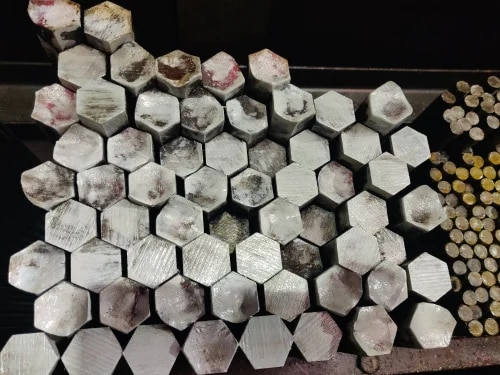 | Steel Items AISI 1010 LOW CARBON STEEL BARS Supply of AISI 1010 LOW CARBON STEEL BARS by STEEL MART Specification Chart of AISI 1010 Grade can be submitted by STEEL MART on request AISI 1010... View product → |
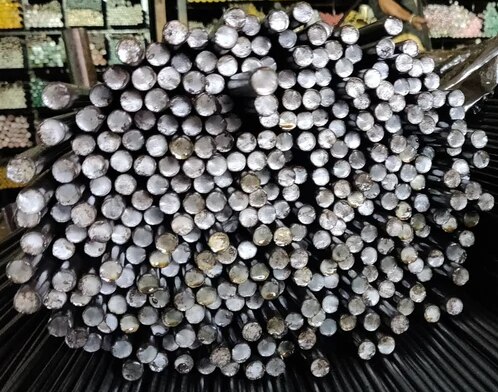 | Steel Items SAE 1010 Low Carbon Bright Bar Supply of sae 1010 low carbon bright bar by steel mart specification chart of sae 1010 low carbon grade can be submitted by steel mart on request sae... View product → |
Frequently asked questions
Which fits the part better: AISI 1010 or AISI 1035 steel?
Choose AISI 1010 for easier forming, welding, and lower strength requirements. Choose AISI 1035 when higher strength and hardness after heat treatment justify more demanding machining and welding.
How do heat treatment and product form affect the choice?
Specify whether the bar is hot rolled, cold finished, forged, annealed, normalized, or quenched and tempered. The condition changes dimensional tolerance, hardness, machinability, and achievable strength.
What welding, machining, and storage risks should you plan for?
AISI 1035 needs tighter control of heat input, preheat, cooling, and hydrogen exposure than AISI 1010. Confirm tooling and cutting parameters, then protect bars from rust, contamination, and mixed heats.
What should a Chennai steel bar enquiry include?
State grade, standard, diameter or section, length, quantity, condition, tolerances, test requirements, delivery location, and required documents such as a heat-analysis certificate.