
A fast quote is useful only when it identifies a plate that is physically available, correctly certified and capable of reaching your site by the required date. By checking stock location, dimensions, traceability, heat treatment, testing and dispatch conditions in the right order, you can separate ready material from a mill-order promise and issue a purchase order with fewer delays.
Key takeaways
- Ask for the available heat number, exact dimensions, quantity, and delivery date.
- Request the MTC, heat treatment details, impact results, and supplementary tests.
- Keep heat numbers attached when plates are cut, bundled, or delivered.
- Confirm stock, inspection documents, cutting limits, and dispatch terms before issuing the PO.
How to verify that SA 516 Gr 70 plate is actually available in Chennai
Send the first enquiry with the grade, thickness, width, length, quantity, delivery location and required date. For urgent SA 516 Gr 70 plate availability in Chennai, ask a local stockist for an available heat before considering mill production or transfer.
- Require written confirmation of the physical stock location, actual plate number or heat number, current photographs showing markings, measured thickness, scanned material test certificate and dispatch capability.
- Define ready stock as the required plate physically held in Chennai and dispatchable after payment and document approval. Cut-to-size stock is a parent plate in Chennai awaiting cutting; a cutting queue adds time.
- Treat remnants as leftover pieces with limited dimensions. Inter-city transfer means the plate is elsewhere and needs transport; imported stock may require customs or port movement; mill-order material still requires production.
- Ask for the loading date, carrier booking, lifting equipment and rain protection. Transport scheduling, loading time, monsoon exposure and surface rust can delay an urgent delivery even after cutting finishes.
- Reject vague answers. “Available” or “Can be arranged” does not prove Chennai inventory or a confirmed dispatch date.
Confirm whether cutting creates fresh edges, whether the measured thickness meets your minimum, and whether the supplier can dispatch the identified plate rather than substitute another heat. The fastest route is evidence first, purchase order second.
Which SA 516 Gr 70 plate sizes and quote details should you request
Request a comparable quotation with the material specification and fabrication plan in the same message. Include:
- Quantity and number of plates
- Nominal thickness, minimum acceptable thickness, width and length
- Plate number or identification requirement
- Delivery address and required delivery date
- Full-plate or cut-size requirement
- Edge condition, such as mill edge or trimmed edge
- Cutting tolerance and required machining or forming allowance
Treat 1,500 × 3,000 mm, 1,500 × 6,000 mm and 2,000 × 6,000 mm as quotation targets, not guaranteed Chennai stock sizes. Thickness and origin—domestic or imported—control availability, so ask for the actual thickness, mill tolerance and available heat.
Ask whether the offer covers a full plate, remnant or cut piece, and request the minimum purchasable size. Include scale, machining allowance, forming allowance and the mill’s thickness tolerance in your usable-thickness calculation.
| Option | Benefit | Limitation |
|---|---|---|
| Full plate | Fewer joins and stronger traceability | Higher freight and scrap |
| Cut piece | Lower freight and less scrap | Cut identification must remain intact |
| Remnant | Can reduce cost | Dimensions and traceability may restrict use |
| Nonstandard or mill production | Matches the design closely | Adds cutting or production time |
How to specify the correct Grade 70 plate for the equipment
ASTM A516 Grade 70 and ASME SA-516 Grade 70 are closely related labels, but they are not interchangeable on a pressure-vessel purchase order. State the governing ASME Boiler and Pressure Vessel Code section, specification edition, supplementary requirements, and whether the equipment requires the SA designation.
Grade 70 requires minimum yield strength of 38 ksi (about 262 MPa), tensile strength of 70–90 ksi (about 485–620 MPa), and elongation based on thickness and gauge length.
Require the quotation to name the delivery condition: normalized, normalized-and-tempered, or another specified condition. “Boiler plate” and “as rolled” are incomplete descriptions. Review thickness, carbon equivalent and heat chemistry with the welding engineer; they affect preheat, interpass control, consumables, welding procedure, post-weld heat treatment, forming allowance and corrosion allowance.
For a sa 516 gr 70 boiler plate supplier, compare the grade against the design need:
| Material | Key distinction | Choose it when |
|---|---|---|
| SA 515 Gr 70 | Higher-temperature pressure-vessel service | The code and design temperature specify it |
| SA 516 Gr 60 | Lower strength | Design calculations permit lower yield |
| S355 / IS 2062 | Structural grades | The code does not require pressure-vessel plate |
| Generic normalized carbon steel | Incomplete designation | Never for controlled pressure equipment |
Grade 70 is wrong for stainless or alloy corrosion resistance, substantially higher-temperature service, specified low-temperature toughness, or a code that does not permit it.
Which certificates and tests must accompany a pressure-vessel plate
The certificate must let you match the paper to the physical plate, not merely confirm that it is “tested.” Check the heat or cast number, plate number, dimensions, thickness, standard and edition, heat-treatment condition, chemical analysis, tensile strength, yield strength, elongation and applicable gauge length.
Request these items before approving the material:
- An EN 10204 Type 3.1 certificate when project document control requires independent certification; “tested” does not mean 3.1.
- Charpy results only when design temperature, thickness, cyclic duty, purchaser specification or code requires them. State test temperature, absorbed-energy requirement, specimen orientation and acceptance basis.
- Ultrasonic examination when internal-lamination limits matter. Specify ASTM A578/A578M or ASTM A435 where the project specification calls for it, together with the acceptance level.
- Hardness testing, supplementary testing and positive material identification as separate requirements.
| Test or document | State on the order | What it proves |
|---|---|---|
| Charpy impact | Temperature, energy, orientation, acceptance basis | Low-temperature toughness |
| Ultrasonic examination | ASTM A578/A578M or ASTM A435 and level | Internal discontinuity limits |
| PMI | Alloy elements and acceptance range | Alloy consistency only |
PMI does not replace the MTC, tensile results or heat traceability. Match every certificate entry to markings on the plate before cutting.
How to preserve traceability when the plate is cut or delivered
Inspect the plate before fabrication, then preserve its identity through every cut. Measure thickness at several points, check flatness, inspect edges for dents or lifting damage, and look for laminations, deep corrosion or suspicious surface patches.
- Photograph the plate markings and confirm the heat number and plate number against the material test certificate.
- Require each cut piece to carry both numbers by stamping, paint marking or a controlled identification method that will survive handling, blasting and fabrication.
- Record the original plate dimensions, cut dimensions and marking location before dispatch.
A cut part without traceability can become unusable even when the parent plate complied, because nobody can prove which certified material entered the weldment.
| Delivery control | Buyer’s instruction |
|---|---|
| Packing | Protect edges and markings with secure packing |
| Lifting | Specify spreader bars, slings or magnets suitable for plate weight; prevent edge damage |
| Weather | Use waterproof covering and keep rain off unprotected carbon steel |
| Rust | Define acceptable light, removable surface oxidation; reject deep pitting or scale that reduces thickness |
| Evidence | Request dispatch photographs showing markings, dimensions and packing |
| Transport | Confirm insurance, carrier booking and vehicle details |
| Date | Treat a promised delivery date separately from a carrier booking confirmation |
Write rejection terms for wrong grade, short dimensions, illegible identification, missing certificates, unacceptable surface defects or internal defects revealed by agreed inspection.
What a Chennai supplier must confirm before you release the purchase order
Do not release the purchase order until the supplier accepts these points in writing:
1. Confirm ASME SA-516 Grade 70 designation, governing code edition, thickness, width, length, quantity and delivery heat-treatment condition.
2. State the physical stock location, heat number, plate number and current inventory evidence: dated photographs, measured thickness and a scanned MTC. “Can be arranged” is not Chennai stock.
3. Define the testing scope, including chemical and tensile results, Charpy or ultrasonic testing where specified, and request an EN 10204 Type 3.1 certificate. Require the complete document pack with the shipment.
4. Record the marking method for every plate or cut piece, cutting tolerance, machining allowance, firm delivery date and rejection terms for wrong grade, short dimensions, missing documents, illegible traceability or unacceptable defects.
5. Ask whether the supplier can cut or machine the plate, dispatch from Chennai and protect it during transport. If you are comparing an SA 516 Gr 70 plate supplier in Chennai, Steel Mart belongs in that comparison only against these written confirmations, not a general catalogue listing.
Send the full enquiry, receive stock and document evidence, approve the certificate, inspect the plate on arrival, then release it to fabrication only after heat and plate traceability remain intact.
Related product
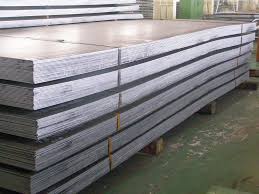 | BQ and Wear Resistant Plates SA 516 Gr 60-70 Boiler Quality Plate SA 516 Grade 60 / Grade 70 Boiler Quality Plate is a pressure vessel quality carbon steel plate designed for medium to low-temperature service. View product → |
Frequently asked questions
How can you verify SA 516 Gr 70 plate availability in Chennai?
Ask the supplier to confirm physical stock, heat number, plate dimensions, quantity, warehouse location, and the date the material can dispatch. Request a photograph or stock report when the order is urgent.
Which sizes and quote details should you request for SA 516 Gr 70 plate?
Specify thickness, width, length, number of plates, total weight, cutting requirements, delivery location, required date, edge condition, and whether you need normalized or normalized-and-tempered material.
Which certificates and tests should accompany SA 516 Gr 70 pressure-vessel plate?
Request the mill test certificate showing ASTM or ASME specification, Grade 70 chemistry, tensile and yield results, elongation, heat treatment, impact results when specified, heat number, and plate identification. Add ultrasonic testing or other supplementary tests only when the equipment specification requires them.
How do you preserve traceability after SA 516 Gr 70 plate is cut?
Transfer the original heat number and plate identification to every cut piece, retain the cutting map, and match each piece to the MTC. Record the supplier, delivery note, quantity, and dispatch bundle.