
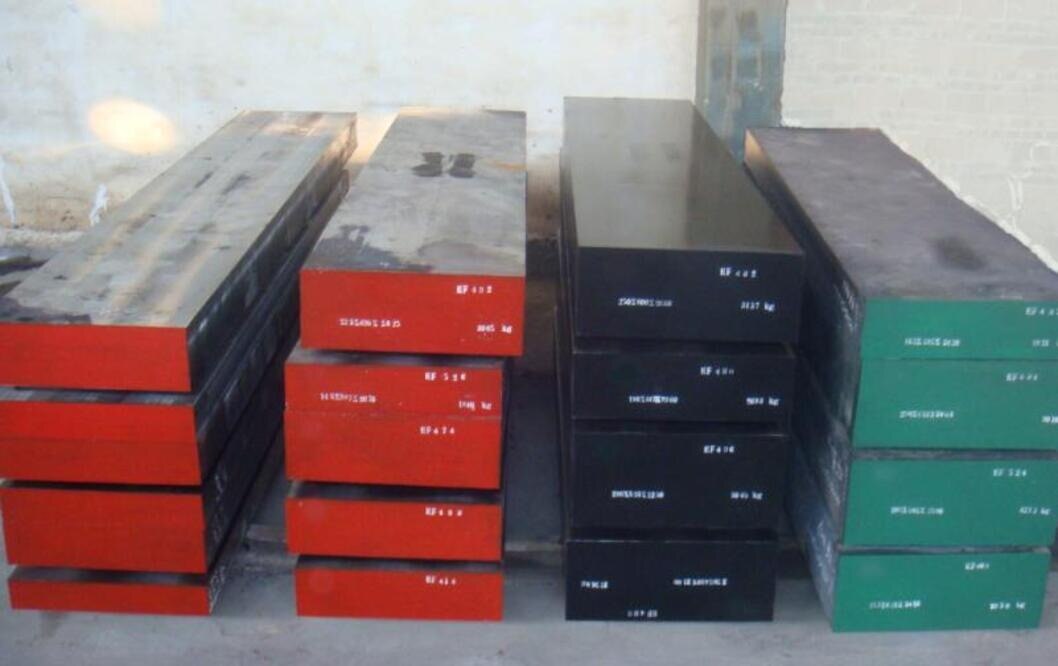
Choosing between EN 47 and EN 42J depends on section size, fatigue duty, heat treatment and the material actually documented by the supplier. You will be able to match each grade to spring design, service conditions and supplied form, while avoiding unsafe substitutions with EN 45 or EN 9.
Key takeaways
- Treat EN 47 and EN 42J as different legacy spring-steel designations.
- Confirm the modern grade, standard, heat-treatment route and test documents.
- Choose EN 47 for alloyed spring duty; choose EN 42J for high-carbon applications.
- Specify diameter, condition, hardness, tolerances and certification before ordering.
What EN 47 and EN 42J Actually Designate
EN 47 and EN 42J are not equivalent grades. EN 47 is a legacy BS 970 spring-steel designation commonly linked to 50CrV4 or 1.8159; EN 42J is a legacy BS 970 high-carbon spring steel designation. The name alone does not define a complete modern specification.
| Grade | Typical chemistry, mass % | Alloying significance |
|---|---|---|
| EN 47 / 50CrV4 | C 0.47–0.55, Si 0.15–0.40, Mn 0.70–1.10, Cr 0.90–1.20, V 0.10–0.25 | Chromium and vanadium improve hardenability and through-section consistency |
| EN 42J | C 0.80–0.90, Mn about 0.60–0.90, Si about 0.10–0.35; no intentional chromium-vanadium addition comparable to EN 47 | High carbon supports hardness, but section-size and quench sensitivity are greater |
Treat those ranges as identification guidance, not permission to accept any matching melt. For en 47 versus en 42j in indore, require the original standard, product form and heat-analysis certificate; revisions and supplier specifications can alter limits.
- State the grade and standard exactly, such as BS 970 EN 47 or the supplied 50CrV4 / 1.8159 designation.
- Require carbon, manganese, silicon, chromium, vanadium, phosphorus and sulphur results on the certificate.
- Specify section size, allowable decarburisation, delivery condition and heat-treatment route.
- Request EN 10204 3.1 inspection documents; add ultrasonic testing for critical forged stock.
- Reject substitution of EN 42J for EN 47 until hardness, dimensional change and fatigue performance are requalified.
How Their Heat-Treated Properties Compare
An EN 47 or EN 42J label does not, by itself, guarantee the tensile strength, yield strength or hardness your spring requires. Compare certified results for the specified bar or strip section after the stated hardening-and-tempering treatment; annealed delivery values cannot predict finished spring performance.
| Property | EN 47 | EN 42J | Procurement decision |
|---|---|---|---|
| Tensile strength | Set by austenitising, quench and tempering; chromium-vanadium improves through-hardening in larger sections | Can reach high strength in small sections, but the core may remain softer as section increases | Accept only the tested range for the actual section |
| Yield strength or Rp0.2 | Usually more repeatable after tempering, with better resistance to temper softening | Highly dependent on quench severity and section thickness | Specify ReH or Rp0.2, not “spring quality” |
| Hardness | Specify the final HRC or HB range after tempering | Specify the final range; excessive hardness raises cracking risk | Match hardness to forming, fatigue and machining requirements |
| Elongation | Falls as hardness rises; require the certified minimum | Also falls sharply at high hardness | Reject a result below the drawing minimum |
| Reduction of area | Useful evidence of ductility and internal soundness after treatment | Can be reduced by quench stress, segregation or cracking | Require the minimum value and test direction |
For EN 47, request the section size, delivery condition, heat-treatment route and hardness range together. For EN 42J, demand test coupons or prior qualification proving core hardness, dimensional change and fatigue performance. A supplier quoting only the grade has not defined the mechanical condition.
Which Grade Fits the Spring Duty and Heat-Treatment Route
Select EN 47 when the spring carries high cyclic stress, has a large diameter or section, or must retain consistent properties through hardening. Choose EN 42J for smaller, less highly stressed springs when testing confirms its section-size and heat-treatment limits.
For en 47 versus en 42j in indore, compare the complete specification rather than the grade name.
| Design factor | EN 47 | EN 42J |
|---|---|---|
| Load and stress | Better margin for heavily loaded springs after proper hardening and tempering | Suitable for moderate loads when the tested hardness and section are adequate |
| Deflection | Elastic deflection is almost the same at identical dimensions because both are steel; check stress and permanent set | Do not select it to reduce deflection; change diameter, wire size or geometry |
| Diameter or section | Preferred for larger sections because chromium-vanadium improves through-hardening consistency | Best limited to smaller sections unless test coupons prove the core properties |
| Fatigue cycles | More defensible for high-cycle service and repeated shock loading | Acceptable for lower-cycle duty after fatigue qualification |
| Operating temperature | The stronger choice where tempering stability and strength retention matter | Use only within a demonstrated tempering and service-temperature range |
| Corrosion exposure | Not stainless; protect with coating, plating, paint or controlled lubrication | Same limitation, with no inherent corrosion advantage |
For EN 47, specify hardening followed by tempering, plus the target hardness range. For EN 42J, control preheating, austenitising, quenching and immediate tempering; sharp corners and abrupt section changes increase cracking and distortion risk. Any substitution requires requalification of hardness, dimensional change and fatigue life.
Round Bar, Coil and Spring Component Manufacturing Choices
Leaf springs need hot-rolled or forged flat bar, followed by controlled forming, hardening and tempering. Flat springs, clips and washers usually start as strip or thin plate, allowing blanking and bending before heat treatment; EN 42J suits simple thin sections, while EN 47 gives more dependable hardening when thickness or fatigue duty increases.
| Component | Supplied form and manufacturing route | Main inspection focus |
|---|---|---|
| Leaf spring | Flat bar or plate; hot forming, cambering, hardening and tempering | Decarburisation, cracks, laps, camber, hardness and thickness |
| Flat spring | Strip or thin flat bar; cold forming before heat treatment | Edge cracks, burrs, surface seams, flatness and hardness uniformity |
| Clip | Strip or flat bar; blanking, piercing, bending, then heat treatment | Hole distortion, bend cracking, decarburisation and residual distortion |
| Washer | Strip, plate or flat bar; punching or machining, then heat treatment | Burrs, punched-edge cracks, warping, concentricity and hardness |
| Shaft | Round bar or forged round stock; turning, keyway cutting, hardening and tempering | Straightness, seams, laps, inclusions, runout and ultrasonic indications |
| Coiled component | Spring wire or round bar; coiling, stress relief, hardening and tempering as specified | Coil diameter, pitch, surface cracks, decarburisation and hardness |
Inspect every batch for longitudinal seams, laps, quench cracks, pits, scale and soft spots. Check forged EN 47 with ultrasonic testing when section size or critical fatigue duty warrants it; verify the certificate records heat number, hardness range and allowable decarburisation.
What to Put on an Indore Steel Purchase Specification
Request a complete material definition, not “spring steel.” In the EN 47 versus EN 42J in Indore comparison, state the designation, original standard, product form, finished size, delivery condition and required heat-treatment route.
For EN 42J, ask for the legacy BS 970 reference and a heat-analysis certificate; the name alone does not establish its carbon or manganese content.
- State the chemical limits for carbon, manganese, silicon, chromium and other alloying elements, then compare them with the certificate for the supplied heat.
- Specify hardness or tensile strength after hardening and tempering, plus elongation and reduction of area for the ordered section.
- Define maximum decarburisation depth, surface condition, straightness and machining or grinding allowance.
- For forged or fatigue-critical stock, specify the agreed ultrasonic acceptance level and inspection for laps, seams, quench cracks, grinding burns and non-metallic inclusions.
- Require an EN 10204 3.1 inspection certificate showing heat number, product dimensions, test results and traceability. Steel Mart can use these fields to prepare a grade comparison instead of treating a catalogue label as approval.
| Option | Specify and verify | Do not assume |
|---|---|---|
| EN 47 | Alloy chemistry, section, hardening-and-tempering condition and final hardness | “EN 47” alone defines spring performance |
| EN 42J | Original BS 970 designation, heat analysis and tested properties | It is equivalent to EN 47 |
| EN 45 | 55Si7 or the stated 080A67-type designation, silicon level and tempering response | Carbon percentage alone permits substitution |
| EN 9 | Exact C55 or 070M55/080M55 reference and intended part function | Plain steel is automatically a spring-steel replacement |
Related products
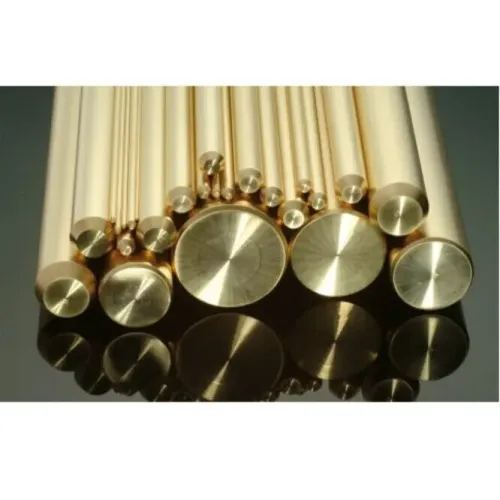
 | Stainless Steels EN 42J Spring Steel View product → |
 | Steel Items supply of en 42j spring steel materials by steel mart specification chart of en 42j spring steel materials grade can be submitted by steel mart on... View product → |
Frequently asked questions
Are EN 47 and EN 42J equivalent spring steels?
No. EN 47 is a legacy BS 970 designation associated with chromium-vanadium spring steel, while EN 42J is a legacy high-carbon spring-steel designation. Confirm the modern specification rather than treating the names as interchangeable.
How do EN 47 and EN 42J differ after heat treatment?
Their alloy content and hardenability differ, so the same austenitising, quenching and tempering schedule will not produce identical results. Compare the required hardness, toughness, section size and distortion limits before selecting a route.
When should you choose EN 47 instead of EN 42J?
Choose EN 47 when the spring duty requires the hardenability and performance associated with an alloyed chromium-vanadium spring steel. Choose EN 42J when a high-carbon spring-steel route meets the component duty and manufacturing process.
What should an Indore steel purchase specification include?
State the modern grade or cross-reference, governing standard, product form, diameter or section, delivery condition, heat-treatment requirements, hardness range, mechanical tests, surface condition, dimensional tolerances, quantity and inspection documents.
Related products
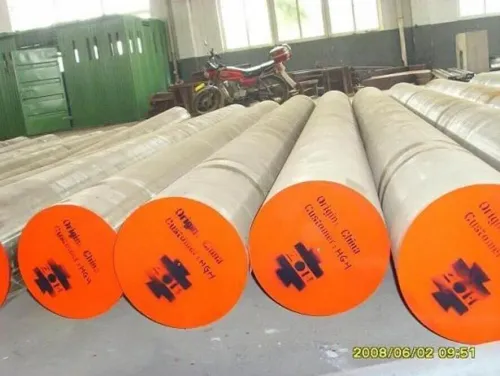
 | Steel Items Supply of EN 47 SPRING STEEL ROUND BARS by STEEL MART Specification Chart of EN 47 SPRING STEEL ROUND BARS Grade can be submitted by STEEL MART on... View product → |
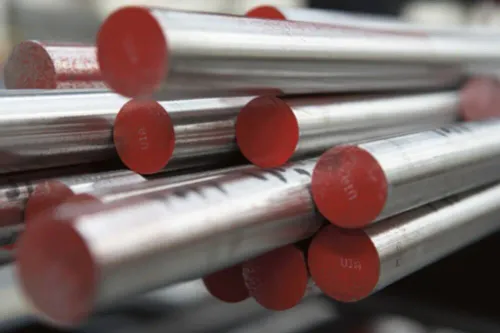
 | Stainless Steels EN 9 (C60) SPRING STEELS View product → |