
A quotation for 31CrV3 is incomplete until it identifies the standard, material condition, product form, dimensions and inspection documents. By the end, you will be able to compare 31CrV3 steel specifications, reject unsupported equivalents and verify that the delivered stock matches its certificate and intended application.
Key takeaways
- Confirm 31CrV3 against EN 10083-3 and material number 1.2208.
- Match annealed, quenched-and-tempered or other delivery condition to the part.
- Check heat numbers, chemistry, mechanical results and signatures on the certificate.
- Specify dimensions, tolerances, testing and rejection terms in the purchase order.
Confirm the grade identity before comparing prices
31CrV3 identifies a chromium-vanadium alloy steel: “31” indicates about 0.31% carbon, “Cr” indicates chromium, and “V” indicates vanadium. It is commonly assigned material number 1.2208, but that number alone is not a complete purchase specification. Cite the exact edition of EN 10083-3, or the governing product standard accepted for your application.
| Item | What to confirm in the order | Common published chemistry or identification |
|---|---|---|
| Material | 31CrV3, material number 1.2208, not merely “Cr-V steel” | Chromium-vanadium quenched-and-tempered steel |
| Carbon | Certified range against the cited standard | 0.28–0.35% |
| Silicon and manganese | Heat analysis within the standard limits | Si 0.10–0.40%; Mn 0.60–0.90% |
| Chromium and vanadium | Heat analysis, not a supplier’s equivalent claim | Cr 0.90–1.20%; V 0.10–0.20% |
| Impurities | Maximum phosphorus and sulphur values | P and S about 0.035% maximum each |
| Balance | State iron as the balance element | Fe balance |
Your 31crv3 steel specifications should name the product form, dimensions, delivery condition, governing standard, heat number and required inspection document. State hot-rolled, forged, peeled, ground or bright-drawn stock; these conditions change machining allowance and surface removal. Do not accept 30CrV9, 1.7707 or 6150 as interchangeable without written chemistry and property approval against the drawing.
Match delivery condition and properties to the part
Buy the delivery condition that matches the machining route, not the cheapest chemistry quote. Annealed 31CrV3 steel stock suits parts requiring substantial material removal; pre-hardened stock reduces heat-treatment handling but increases tool wear and leaves less scope for correcting distortion.
| Condition | Performance and production effect | Cost implication |
|---|---|---|
| Annealed | Softest practical machining route; requires later hardening and tempering | Adds treatment, handling and inspection cost |
| Normalized | Refines structure and gives a stronger starting condition than annealed stock | Can reduce treatment time, but does not replace final hardening |
| Quenched and tempered | Delivers specified strength and hardness before machining | Costs more and can complicate dimensional correction |
| Pre-hardened | Ready for limited machining with no in-house hardening cycle | Higher tooling demand and a narrower finished-hardness range |
Ask the quotation to identify whether the stock is hot-rolled, forged, peeled, ground or bright drawn. Product form controls decarburized depth, straightness, tolerance, surface finish and machining allowance; buying ground or bright-drawn stock can reduce removal, while forged or hot-rolled stock can cost less but leave more work.
State delivery hardness, heat-treatment cycle, mechanical tests and test-coupon location and orientation in the order. Chemistry alone does not prove that the part will reach its required strength.
Reject automatic substitutions. Compare documented chemistry, cleanliness, heat-treatment response and standard status before approving 30CrV9, 1.7707 or 6150 in place of 31CrV3; a lower quotation can become scrap, rework or a redesign.
Read the material test certificate as a traceability document
A valid certificate must connect the exact heat to the material in your hands, not merely print “31CrV3.” Request an EN 10204 Type 3.1 inspection certificate when independent certification is not required. It must identify the manufacturer, certificate number, material number 1.2208, governing standard, product form, delivery condition, dimensions, heat number and order reference.
| Certificate type | What it proves | What it does not prove |
|---|---|---|
| EN 10204 2.1 | The supplier declares conformity | No specific test results for your heat |
| EN 10204 2.2 | Non-specific test results support conformity | Results may come from another heat |
| EN 10204 3.1 | The manufacturer reports specific results for the supplied heat | No independent purchaser or inspector validation |
| EN 10204 3.2 | Specific results are verified with an authorized inspection representative or purchaser’s representative | Adds coordination and inspection cost |
Check that the reported heat analysis matches the purchase-order chemistry and that tensile strength, yield strength, elongation, hardness and impact results, when ordered, apply to the stated delivery condition. A nominal grade printed without results is not traceability.
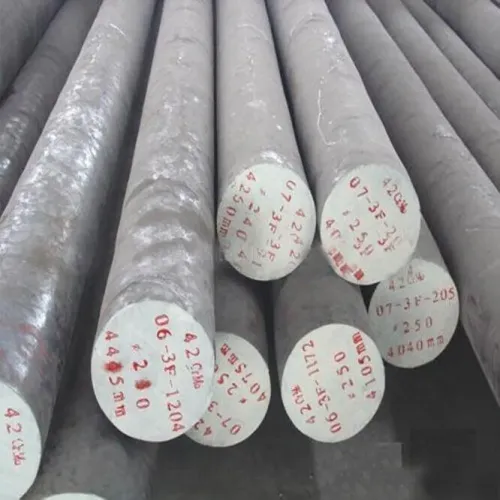
- Match the certificate heat number to the bar, forging or bundle tag.
- Require the seller to transfer that number to every cut piece.
- Record the original bar or forging size, end condition and cut history; cropped ends and unidentified short pieces can hide defects or break traceability.
- For ultrasonic testing, demand EN 10228-3, the acceptance class, full-cross-section coverage and rejectable indication limits—not simply “UT tested.”
Inspect Mumbai stock, dimensions and internal soundness
Before accepting local material, confirm that the quoted 31CrV3 steel is physically in Mumbai, not merely available from a 31CrV3 steel supplier in Mumbai after import or mill release.
1. Ask where the stock sits, how many bars or tonnes are available, and whether it belongs to one heat. Stock held in another warehouse, imported against order, or cut from a mixed bundle changes delivery time, minimum quantity, replacement options, and certificate traceability.
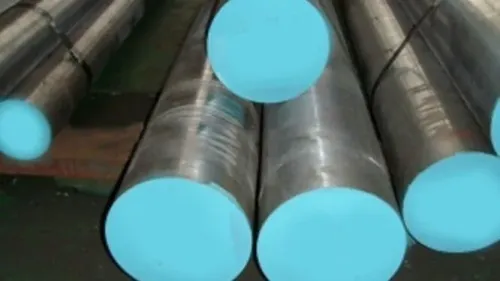
2. Compare each bar’s measured diameter, length, straightness, and ovality with the purchase requirement. Identify whether it is hot-rolled, forged, peeled, ground, or bright drawn; rolled stock needs more machining allowance, while buying undersize material can make scale removal or surface machining impossible.
3. Inspect the cut ends and surface under adequate light. Reject or quarantine visible seams, laps, cracks, heavy scale, grinding burns, or decarburized layers unless your acceptance criteria explicitly permit them. Record whether the supplied pieces are original full lengths or saw-cut remnants.
4. Require an ultrasonic testing report tied to the heat and piece numbers. Specify the test method, coverage, direction, calibration reference, and acceptance class before inspection; UT checks internal discontinuities, not every surface-breaking defect.
5. Match the marked heat number on the bars, cut pieces, packing list, and material test certificate. A clean surface does not prove internal soundness, and a certificate without piece-level traceability does not prove that the tested heat is in your delivery.
Steel Mart should be assessed against these physical checks, not its location or catalogue wording alone.
Related product
 | Steel Items STEEL MART offers all kinds of STEELS in 31CrV3 STEEL The 31CrV3 STEEL offered by STEEL MART is 100% OK - Tested STEEL MART is renowned for the... View product → |
Put the acceptance requirements into the purchase order
Write the purchase order so acceptance is objective, not based on the supplier’s description of 31CrV3 alloy steel in Mumbai. Use this wording as a starting point:
1. “Supply 31CrV3, material number 1.2208, to [named governing standard], in [bar/forging] form, [diameter or section] × [length], delivered [annealed/normalized/quenched and tempered]. No substitute, equivalent grade or mixed heat is permitted without written approval.”
2. “Each piece or bundle shall carry heat identification matching the material test certificate. The certificate shall report ladle chemistry, delivery condition, dimensions, heat-treatment record, tensile strength, yield strength, elongation and hardness against the specified limits.”
3. “Supply full-section ultrasonic examination to EN 10228-3, acceptance class [state class], with rejectable indication limits stated in the report.” Do not accept “UT tested” without the method, class, coverage and result.
4. “Finished dimensions shall not be below the ordered minimum after permitted tolerances, and surfaces shall be free from cracks, seams, laps, harmful scale, grinding burns and unacceptable decarburization.” Inspect cut ends as well as the outside surface.
5. “Acceptance is conditional on document review, dimensional inspection, surface inspection and verification of the specified heat-treatment result.” If hardness or strength fails, quarantine the lot; do not allow re-treatment or replacement without written disposition. Require confirmation that stock is physically available in Mumbai, rather than imported or cut from an untraceable mixed bundle.
Frequently asked questions
How do you confirm that steel is actually 31CrV3?
Ask for the exact governing standard and compare the grade designation, material number 1.2208, chemical composition and heat number on the material test certificate.
Which 31CrV3 delivery condition should you buy?
Choose the condition that suits the part and process, such as annealed stock for machining or a specified quenched-and-tempered condition when strength and hardness are required. Confirm the required hardness or mechanical values before ordering.
What should you check on a 31CrV3 material test certificate?
Check the heat number, grade, standard edition, product dimensions, chemical analysis, tensile or hardness results, test method, authorised signature and certificate-to-material match.
How should you inspect 31CrV3 steel stock in Mumbai?
Verify the actual quantity, diameter or section, length, dimensional tolerances, surface condition, markings and heat numbers. Require ultrasonic testing when internal soundness is critical.
What must the purchase order specify for 31CrV3 steel?
State the grade, standard edition, delivery condition, dimensions and tolerances, quantity, surface and internal quality requirements, test certificate documents, inspection rules and rejection procedure.