
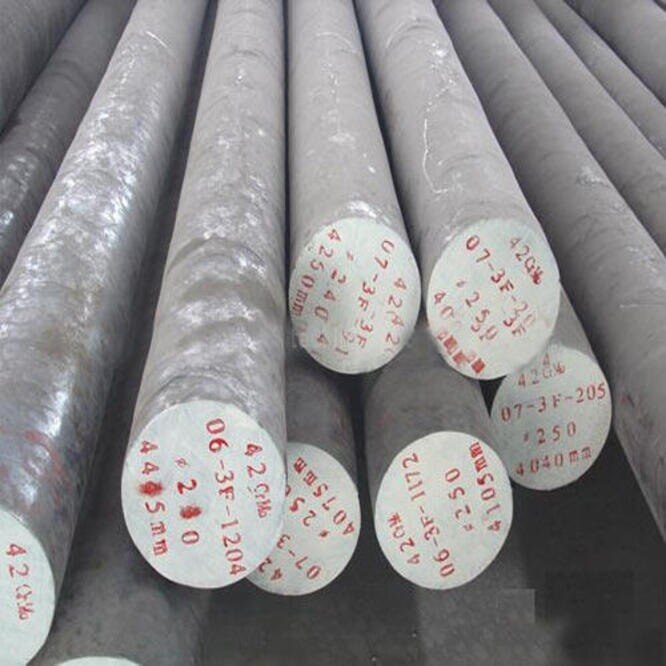
Choosing a coil by grade name alone can create problems with chemistry, forming behaviour, heat treatment and fatigue life. By the end, you will be able to distinguish 60CrV4 product forms, compare realistic alternatives, write a purchase specification and verify whether the supplied coil suits your spring process.
Key takeaways
- Confirm 60CrV4, material number 1.8195, and the governing standard.
- Specify coil width, thickness, tolerance, edge condition, and certificate requirements.
- Match coil properties to forming method, service load, and heat treatment.
- Quarantine coils with mismatched heat numbers, dimensions, surface defects, or certificates.
Identify the 60CrV4 grade and the coil form you actually need
60CrV4 spring steel is commonly paired with material number 1.8195 in European and DIN supply practice. Confirm both on the quotation, then name the governing standard; “60CrV4” alone may be a trade designation. Accept the material against the heat certificate, not the grade name.
Typical certificate chemistry is carbon 0.56–0.64%, manganese 0.70–1.10%, chromium 0.90–1.20%, vanadium 0.10–0.25% and silicon commonly controlled around 0.15–0.40%. Require actual heat values and traceability to each coil.
Specify the form before comparing spring steel coils:
- Hot-rolled strip coil: mill-scale or descaled surface, looser thickness and flatness tolerances, and preparation for hot forming or further rolling.
- Cold-rolled spring strip coil: tighter gauge and width control, cleaner surface, specified slit edges, and a route suited to precision forming or heat treatment.
- Coiled spring wire: round or shaped cross-section, wire tolerances, a different surface route and coiling equipment; it is not strip.
Your purchase checklist should state thickness, width, tolerances, inside and outside coil diameters, maximum coil mass, rolling direction, delivery condition and edge finish. Add annealed, hardened-and-tempered or heat-treatment-ready condition, surface and decarburization limits.
Thus, 60CrV4 spring steel for coil is not one universal product: form, processing route and certificate determine whether it fits your spring line.
Compare 60CrV4 with the grades spring manufacturers actually consider
Choose 60CrV4 when its carbon level, hardenability and achievable tempered hardness match the spring duty—not because the name looks familiar. The nominal carbon difference between 50CrV4 and 60CrV4 changes as-quenched hardness, hardenability, toughness, weldability and the spring temper you can achieve.
| Option | Decision point | Use it when |
|---|---|---|
| 60CrV4 | Higher carbon chromium-vanadium spring grade | You need higher hardness after quenching and a documented 60CrV4 specification |
| 50CrV4 spring steel coil | Lower nominal carbon than 60CrV4 | Toughness, weldability or easier forming outweigh maximum hardness |
| 50Cr4V2 | Similar-looking designation, not automatic equivalence | The governing standard and certificate confirm chemistry and properties |
| 58CrV4 | Chromium-vanadium alternative | Its certified hardenability and tempering response suit the section size |
| 42CrV6 | Lower-carbon alloy spring option | Toughness and forming are more important than peak hardness |
| EN42J spring steel coil | Older British designation | You have its BS specification and edition, full chemistry and a documented cross-reference |
| EN47 | Established chromium-vanadium legacy grade | The drawing or customer specification names it and substitution is approved |
| 55Si7 | Silicon-manganese spring grade | Lower cost or a familiar manufacturing route outweighs chromium-vanadium performance |
| SAE 5160 | Chromium spring steel grade | Higher hardenability or a North American legacy specification controls |
| C60/EN9 | Plain-carbon alternative | Cost and simple availability matter, with lower hardenability accepted |
Request actual carbon, chromium, vanadium, silicon and manganese values from the applicable standard or mill certificate. Do not assume that similar names, EN numbers or trade designations are equivalents.
A documented legacy specification should outweigh grade-name preference; higher hardenability, lower cost, simpler forming or higher toughness should outweigh it only when testing confirms the required spring properties.
Write a coil specification that production can inspect
A request for “spring steel coils” without measurable fields invites mismatched material. Specify 60CrV4 spring steel for coil by product form, not grade name alone.
1. State 60CrV4, the governing EN or other standard, and whether delivery means hot-rolled strip, cold-rolled spring strip, or coiled wire. Record quantity, delivery form, rolling direction, and heat/coil traceability.
2. Set thickness and width, each with positive and negative tolerances. Add coil inside diameter, outside-diameter limits, and maximum coil mass so decoiling equipment can accept it.
3. Select annealed, hardened-and-tempered, or heat-treatment-ready condition. Define surface quality, permitted mill scale, and the maximum decarburized depth or layer measured by the agreed metallographic method.
4. Specify slit, rounded, deburred, or milled edges. Reject slivers, laps, edge cracks, burrs, and transverse grinding marks because they initiate fatigue cracks in thin strip; nominal tensile strength cannot reveal that risk.
5. Add flatness, camber, crossbow, and residual-curvature limits after decoiling and straightening. Define the test: unwind a 1 m specimen, place it unrestrained on a certified flat surface, then measure maximum gaps with feeler gauges, camber against a straightedge or chord, and crossbow across the width. State acceptance values.
Match the coil to forming, loading and heat treatment
Match 60CrV4 spring steel to strip or wire thickness, spring index D/d, forming radius and required deflection before you approve the coil. Thin strip with a low radius needs controlled springback; high static loads, cyclic loading and long fatigue life demand a verified yield-strength and toughness range.
Operating temperature and corrosion exposure also determine whether you need protective coating or a different grade.
| Forming route | Specify | Main risk |
|---|---|---|
| Cold forming | Annealed or suitable hardened strip, thickness-to-width ratio, rolling direction and radius trial | Springback from yield strength and residual stress |
| Hot coiling | Heating range, soak time, scale control and decarburization protection | Cold-forming stock is not interchangeable |
| Coiled wire | Wire diameter, spring index, forming load and post-forming treatment | Diameter variation changes deflection and fatigue |
Two coils with identical grade and hardness can spring back differently because thickness-to-width ratio, rolling direction, residual stress and forming radius differ. Run production trials, or purchase against a guaranteed mechanical-property range rather than a grade name alone.
The usual 60CrV4 route is approximately 830–860 °C austenitising, oil quenching and tempering, but set the actual cycle, target hardness and toughness from section size, furnace atmosphere, prior condition and the selected standard. Treat shot peening as a controlled post-treatment: specify intensity, coverage and media, and inspect thin edges.
It improves fatigue resistance through compressive stress; it does not repair decarburization, laps or damaged edges.
Verify the delivered coil before it enters spring production
Do not release a coil on its grade name alone. Demand a certificate traceable to both heat number and coil number, showing actual chemistry, delivery condition, hardness or tensile results, dimensional readings, surface and decarburization results, and the governing standard.
| Check | Evidence to compare | Acceptance action |
|---|---|---|
| Identity | Heat and coil marks match the certificate and packing label | Quarantine broken or missing traceability |
| Properties | Hardness readings across the width and along the coil; tensile results in delivered condition | Investigate gradients before production |
| Surface | Visual inspection plus metallography for scale, laps, slivers and decarburized layers | Reject or hold unexplained defects |
For hardened-and-tempered strip, map hardness at both edges and the centre, then repeat at the coil head, middle and tail. A single tensile result can miss local soft zones. Metallographic measurement must confirm the specified decarburization limit; shot blasting or grinding can hide it without removing the weakened layer.
- Quarantine any coil with missing heat traceability, broken identification or chemistry that does not match the certificate.
- Do not accept a claimed equivalent such as 50CrV4 spring steel coil or EN42J spring steel coil without its standard, edition, full analysis and documented cross-reference.
When evaluating Steel Mart’s 60CrV4 spring steel supply, request the exact grade and standard, product form, thickness, width, coil dimensions, edge condition, test locations, hardness or tensile values, decarburization method and signed heat-and-coil certificate. Compare evidence, not supplier claims.
Related products
 | Steel Items Supply of 50CRV4 SPRING STEEL COILS by STEEL MART Specification Chart of 50CRV4 SPRING STEEL COILS Grade can be submitted by STEEL MART on request... View product → |
 | Steel Products Steel Mart is engaged in offering Spring Steel. We are proud to establish ourselves among the leaders of market as Spring Steel supplier, spring... View product → |
Frequently asked questions
How do you identify the 60CrV4 grade for spring steel coils?
Confirm 60CrV4, material number 1.8195, the governing standard, and the heat certificate. Do not accept a quotation based only on the grade name.
How does 60CrV4 compare with EN42J and 50CrV4 spring steel?
Compare the specified chemical composition, product standard, delivery condition, dimensions, hardenability, forming needs, and final heat treatment. Grade names alone do not establish interchangeability.
What should a production-ready 60CrV4 coil specification include?
State the grade and standard, thickness and width, dimensional tolerances, coil weight and inside diameter, edge condition, surface requirements, delivery condition, testing, certificate type, and heat-number traceability.
How should you inspect a delivered 60CrV4 spring steel coil?
Match the tag, packing list, and certificate to the purchase order; verify heat number, dimensions, surface and edge condition, coil integrity, and test results before releasing the material to production.
Related product
 | Steel Items supply of en 42j spring steel materials by steel mart specification chart of en 42j spring steel materials grade can be submitted by steel mart on... View product → |