
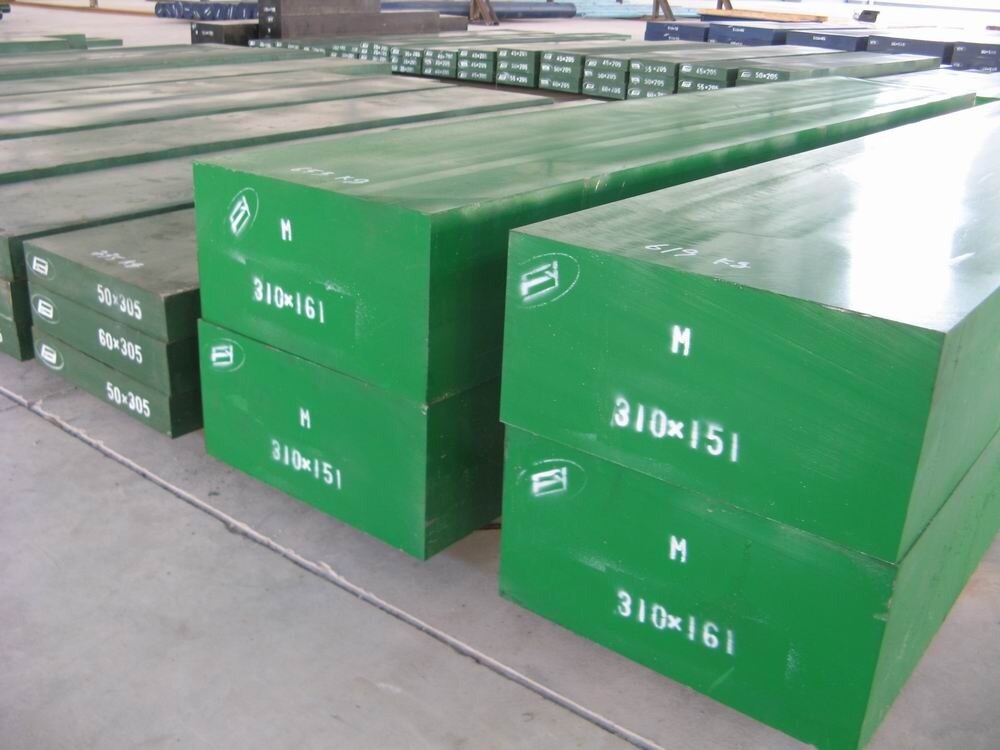
The choice between EN 47 and EN 9 depends on more than which grade name appears stronger: chemistry, section size, heat treatment, surface condition and fatigue loading all change the result. By the end, you will know how to compare the two designations, select a practical treatment route and write a purchase specification that prevents an unsuitable material from arriving.
Key takeaways
- Choose EN 47 for alloyed spring performance and stronger hardenability.
- Choose EN 9 for simpler carbon-steel parts with moderate spring demands.
- Specify chemistry, section size, heat treatment and test documents on the order.
- Do not compare grades without checking the finished part’s load and operating temperature.
What EN 47 and EN 9 Actually Mean
EN 47 and EN 9 are not equivalent modern specifications; they are historical British Steel Specification designations used as shorthand. EN 47 is commonly cross-referenced to 50CrV4 or 51CrV4, while EN 9 is commonly associated with 070M55 and approximately C55 chemistry.
| Element | EN 47: 51CrV4, EN 10089:2002 cross-reference | EN 9: 070M55, BS 970:1988 association |
|---|---|---|
| Carbon | 0.45–0.55% | 0.50–0.60% |
| Manganese | 0.60–1.10% | 0.50–0.80% |
| Silicon | 0.15–0.40% | 0.10–0.40% |
| Chromium | 0.90–1.20% | Not specified as an alloy addition |
| Vanadium | 0.10–0.25% | Not specified as an alloy addition |
| Phosphorus | 0.025% maximum | 0.050% maximum |
| Sulphur | 0.025% maximum | 0.050% maximum |
These figures are cross-reference values, not permission to order by nickname. Limits change between standards, editions and product forms, so verify the exact certificate.
Before buying, state:
- The governing modern standard and grade
- Product form, dimensions and tolerances
- Supply condition, such as annealed or quenched and tempered
- Hardness or mechanical-property requirements
- Testing location, surface condition and inspection certificate
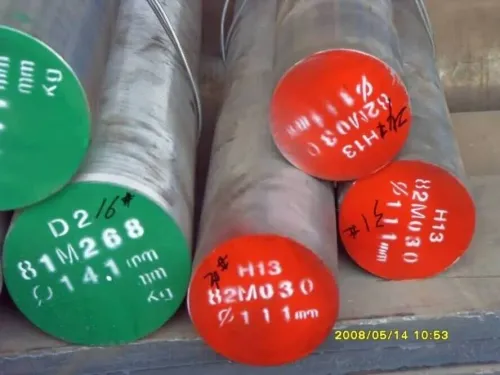
A round bar, forged block and spring strip do not cool or test alike. “EN 47 versus EN 9 spring steel” is therefore a starting comparison; “EN 47 versus EN 9” alone is incomplete procurement language.
How Alloying Changes Hardness, Toughness and Fatigue Performance
After hardening and tempering, EN 47 is the more dependable first comparison for heavily cycled or thicker-section spring steel. Its chromium-vanadium chemistry gives it an advantage in through-hardening, toughness and resistance to permanent set.
| Feature | EN 47 | EN 9 |
|---|---|---|
| Alloying | Chromium improves hardenability and resistance to temper softening; vanadium supports grain refinement. | Plain-carbon composition with no comparable chromium-vanadium hardenability benefit. |
| Core hardness | Holds a more uniform hardened structure through larger sections. | Economical for small sections, but hardness falls more quickly toward the core. |
| Best comparison | Heavily cycled, shock-loaded or thicker springs. | Thin, simple parts where cost and verified properties control the choice. |
Do not attach one hardness, tensile strength, yield strength or elongation value to either grade name. Report each result with section size and condition, such as quenched and tempered, because quench severity, tempering temperature and product form change the result.
Fatigue life can be controlled more by the surface than by nominal chemistry. Crack starters include:
- Surface decarburisation, rolled scale and grinding burns
- Corrosion pits and tool marks
- Sharp shoulders, thread roots and inadequate fillet radii
Specify controlled grinding, suitable fillet radii, corrosion protection and shot peening where the part is heavily cycled. Shot peening adds beneficial compressive stress; careless grinding creates heat damage. Neither grade guarantees a fatigue limit without a defined stress range, cycle count and surface condition.
Heat Treatment Routes and the Risks That Change the Result
Compare EN 47 versus EN 9 spring steel under named processing conditions, not a grade label. For EN 47, start with austenitising at 830–860°C, oil or polymer quenching, then tempering at 400–550°C. Require the heat treater to validate the final hardness target against section size.
| Grade | Starting route | Main control |
|---|---|---|
| EN 47 | 830–860°C; oil or polymer quench; temper at 400–550°C | Confirm hardness for the actual section |
| EN 9 | 800–840°C; oil or polymer for controlled sections; temper at 400–550°C | Use water only where section and process justify higher cracking risk |
These are starting windows, not universal recipes; confirm them against the governing specification. Raising the tempering temperature normally lowers hardness, tensile strength and yield strength while increasing elongation and toughness. Set the temperature from the drawing’s required properties, not from a generic grade table.
Control the failure risks directly:
- Decarburisation leaves a soft, fatigue-sensitive skin. Use controlled-atmosphere treatment, remove scale, and allow machining stock; check surface hardness or use metallography when a subsurface hardness test could hide decarburisation.
- Water-quenched EN 9 can crack or distort at sharp corners, holes, keyways and abrupt machined transitions. EN 47 still distorts when sections vary or fixturing is poor.
- Support parts during heating and quenching, specify heat-treatment machining allowances, and inspect after straightening. Oil or polymer reduces quench severity but may leave a thick EN 9 section under-hardened.
Choosing by Part, Section Thickness and Service Load
Choose EN 47 as the stronger first comparison for thick forged or machined leaf springs, heavily cycled coil springs, agricultural components, larger clips and parts exposed to shock loading. Chromium improves through-hardening, while vanadium supports a fine hardened structure.
| Part | First comparison | Why |
|---|---|---|
| Thick leaf or coil spring | EN 47 | More consistent core hardness and better resistance to permanent set |
| Heavily loaded agricultural part | EN 47 | Better margin against shock and repeated loading |
| Small clip or washer | EN 9 | Suitable for uncomplicated, moderate-load service |
| Light-duty spring or elastic part | EN 9 | Cost-effective when the section is thin enough for the available quench |
EN 9 fits a simple component when loading is moderate, permanent set is controlled and the section can harden adequately. Do not transfer a result from a small test coupon to a large bar: require hardness or mechanical-property evidence from the actual section.
A round bar, strip, plate and finished spring section do not heat-treat alike. Diameter, thickness, corners and local mass change cooling rate and core hardness; an EN 9 part that hardens well in thin strip can remain soft at the centre of a thick forging.
Neither grade is the right choice for corrosion-sensitive service, elevated temperature, very high fatigue duty, demanding impact toughness or a section that cannot be through-hardened without cracking. Compare stainless spring steel, a nickel-chromium alloy, another alloy spring steel or a purpose-designed process instead.
What to Put on the Purchase Order Before You Buy
A purchase order that says only “EN 47 spring steel” or “EN 9” leaves the result open to dispute. For an enforceable order, specify:
- Governing standard and grade cross-reference; product form; dimensions and permitted tolerances.
- Annealed, spheroidise-annealed or quenched-and-tempered condition.
- Austenitising temperature, quenching medium and tempering range.
- Target hardness, or tensile strength, yield strength and elongation values.
- Section location for testing, surface decarburisation limit, surface finish and straightness.
- Ultrasonic or other inspection, heat number and the required inspection certificate, such as EN 10204 3.1.
- Working stress, stress range, cycle count, allowable permanent set, operating temperature and corrosion exposure.
- Whether shot peening or controlled grinding is required, including grinding-burn limits where relevant.
Ask for results from the actual bar, forging or machined section, not only a small laboratory coupon. Steel Mart can evaluate forged or machined stock against these details when you request a certificate and section-specific evidence.
| EN 47 versus EN 9 | Choose it when | Verify before release |
|---|---|---|
| EN 47 | Hardenability, fatigue margin and thicker-section consistency matter most | Core hardness or mechanical properties, decarburisation and surface condition |
| EN 9 | A smaller, simpler, cost-sensitive part meets the verified property requirements | Permanent set, section hardness and fatigue-critical finish |
That is the practical EN 47 versus EN 9 decision: select the grade that satisfies the defined service evidence, not the shorter name on the order.
Related products
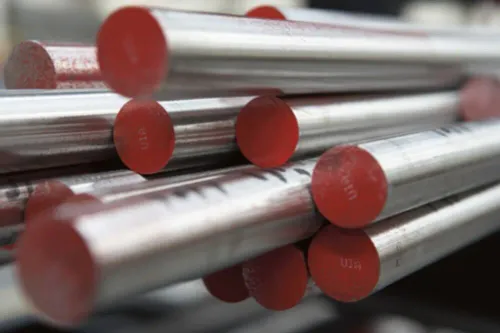
 | Stainless Steels EN 9 (C60) SPRING STEELS View product → |
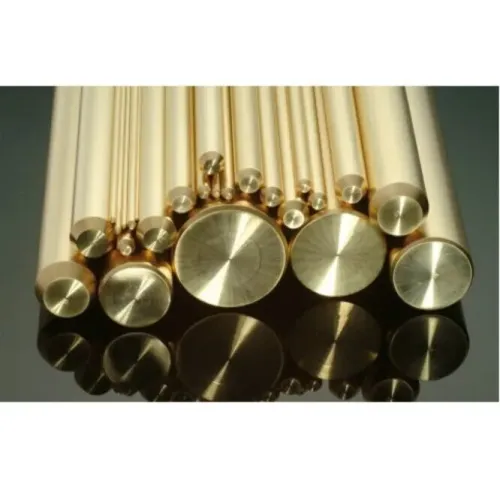
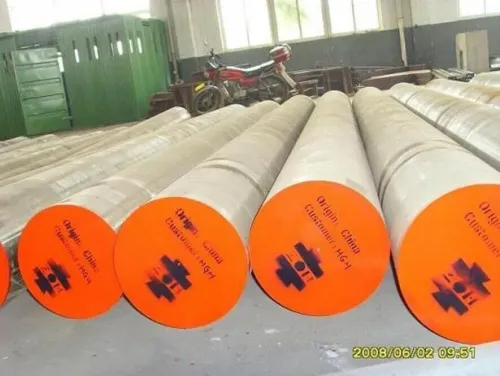
 | Steel Items Supply of EN 47 SPRING STEEL ROUND BARS by STEEL MART Specification Chart of EN 47 SPRING STEEL ROUND BARS Grade can be submitted by STEEL MART on... View product → |
Frequently asked questions
What do EN 47 and EN 9 mean?
EN 47 and EN 9 are historical British steel designations. EN 47 is commonly cross-referenced to 50CrV4 or 51CrV4, while EN 9 is commonly associated with 070M55 and approximately C55 chemistry.
How does EN 47 differ from EN 9 spring steel?
EN 47 contains chromium and vanadium alloying additions, which support hardenability, wear resistance and fatigue performance. EN 9 is a higher-carbon plain steel with fewer alloying additions and a narrower hardening range through thick sections.
Which heat-treatment risks affect EN 47 and EN 9?
Austenitising temperature, soaking time, quench severity, tempering temperature and section thickness all affect the result. Overheating, decarburisation, distortion, quench cracking and incorrect tempering can reduce performance in either grade.
How should you choose between EN 47 and EN 9?
Choose by part geometry, section thickness, service load, fatigue duty, required hardness and production process. EN 47 suits demanding spring applications and thicker sections, while EN 9 can suit simpler parts with moderate loads.
What should a purchase order specify for EN 47 or EN 9?
State the exact grade designation and cross-reference, product form, dimensions, quantity, delivery condition, heat-treatment requirements, mechanical tests, surface condition, inspection certificate and applicable standard.