
Choosing among these three nickel alloys starts with the service environment and required strength, not the word “Inconel” on a quotation. By comparing strengthening mechanism, corrosion exposure, temperature, fabrication route, standards and test data, you can specify the alloy and delivery condition that your component actually needs.
Key takeaways
- Choose 625 for corrosion-first welded service.
- Choose 718 for maximum tensile strength and heat-treated performance.
- Choose 725 for high strength in sour or subsea corrosion.
- Match the purchase order and mill certificate to the service conditions.
Which alloy wins when 625, 718 and 725 are compared directly?
Choose Inconel 625 for corrosion-first welded service, 718 for maximum tensile strength, and 725 when high strength must coexist with severe sour or subsea corrosion.
| Alloy | Strengthening and typical strength | Corrosion and temperature priority | Welding, machining and condition | Procurement effort |
|---|---|---|---|---|
| Inconel 625 | Primarily solid-solution strengthened; annealed wrought minimums about 414 MPa yield and 827 MPa tensile, subject to specification | Chloride, seawater, mixed-acid and welded service; thermal stability and corrosion resistance usually matter more than peak strength | Simplest to weld and machine of the three; commonly supplied annealed | Lowest; verify UNS N06625, product form and governing specification |
| Inconel 718 | Age-hardened by gamma-prime and gamma-double-prime; solution-treated and aged minimums near 1,034 MPa yield and 1,276 MPa tensile | Usually leads on tensile strength; select for high-strength, fatigue-critical and elevated-temperature parts, not strength alone | More demanding welding and machining; requires controlled solution treatment and aging | Moderate to high; condition and aging cycle must be traceable |
| Inconel 725 | Age-hardened nickel-chromium-molybdenum-niobium alloy | High strength with tighter resistance requirements for pitting, crevice corrosion, sulfide-stress cracking and hydrogen-assisted damage | Controlled delivery and final aging are essential; machining is more demanding than annealed 625 | High; confirm condition, aging records and inspection package |
A high-strength shaft does not automatically suit 625: its usual annealed condition has much lower yield strength. Replacing 625 with 718 can reduce corrosion margin and complicate fabrication. Treat “inconel 625 718 725 special metal” as a search phrase, not a specification; the UNS designation and condition decide the material.
What must the specification and mill certificate identify?
A purchase order prevents substitution only when it names the alloy, product form, standard and condition. Specify UNS N06625 for 625, UNS N07718 for 718 or UNS N07725 for 725; “Inconel 625 special metal” is a commercial description, not a grade.
| UNS alloy | Product form to state | Identification required |
|---|---|---|
| N06625 | Bar, billet, plate, seamless tube or forging | Exact ASTM, ASME or AMS specification and annealed condition |
| N07718 | Bar, billet, plate, seamless tube or forging | Exact specification and solution-treated, aged condition |
| N07725 | Bar, billet, plate, seamless tube or forging | Exact specification and final aging condition |
The order must also state dimensions, heat number, mechanical testing, ultrasonic or other inspection, and positive-material-identification results. ASTM B446 or B637-type bar requirements cannot automatically replace a forging specification: chemistry limits, grain flow, mechanical minimums and inspection rules differ by product form.
Read the mill test certificate for these chemistry fields:
- Nickel, chromium, molybdenum, niobium, iron, titanium and aluminium ranges
- Carbon and trace-element limits
- Yield strength, tensile strength, elongation and hardness
- Test direction, product form, specimen location and test temperature
- Complete heat-treatment cycle, including temperatures, holds and cooling
For 718, a commonly specified cycle uses solution treatment near 954°C, then aging near 718°C and 621°C, with furnace cooling between stages. The governing specification controls the exact holds and cooling; this cycle is not a generic stress relief.
How should service environment and temperature decide the alloy?
A generic temperature label cannot choose the alloy: match the actual medium, load and exposure duration. Record concentration, temperature, pressure, contaminants, exposure time and stress for seawater, chloride brines, sour fluids, acids, caustic solutions, high-temperature gases and hydrogen-related service before selecting material.
| Alloy | Best starting point | Main caution |
|---|---|---|
| Inconel 625 | Welded chemical or marine components where corrosion resistance and fabrication outweigh extreme room-temperature strength; solid-solution strengthened | Annealed 625 usually has lower yield strength than age-hardened 718 or 725 |
| Inconel 718 special metal | Rotating, aerospace or high-temperature parts where fatigue, tensile strength and dimensional stability govern; precipitation hardened | Room-temperature strength does not prove continuous-service suitability; obtain long-term exposure data |
| Inconel 725 | Oilfield, subsea and completion-tool hardware requiring high strength with resistance to pitting, crevice corrosion, sulfide-stress cracking and hydrogen damage | Confirm delivery and aging condition because performance depends on heat treatment |
For sour service, require NACE MR0175/ISO 15156 compliance, stated heat treatment, hardness limits and product form. An alloy name alone is not evidence. Compare tensile, yield, creep, fatigue and oxidation data only when each result identifies the test temperature and heat-treatment condition; otherwise the comparison is misleading.
Require the design code to approve the final choice.
- Choose 625 first for corrosion-first welded work when extreme strength is not controlling.
- Choose 718 when strength and fatigue govern, but verify long-duration temperature data.
- Choose 725 when sour, subsea or hydrogen damage makes corrosion resistance as important as strength.
What fabrication risks change the choice after purchase?
625 usually gives the simplest fabrication route: its normal corrosion-resistant condition does not depend on precipitation aging. That does not make welding automatic; section thickness, joint restraint, contamination, filler-metal matching, post-weld treatment and service corrosion still belong in the qualified procedure.
| Alloy | Fabrication risk | Practical control |
|---|---|---|
| 625 | Welding is comparatively forgiving; annealed stock machines more easily | Control heat input and contamination; confirm filler, post-weld treatment and corrosion requirements |
| 718 | Laves-phase segregation, strain-age cracking and undesirable grain-boundary phases can follow poor melting, forging or weld heating | Control forging reduction, solution treatment, aging and the full weld procedure |
| 725 | Strength depends on its controlled delivery and final aging condition | Agree whether to rough-machine before aging and finish-machine afterward |
Treat 718’s solution-and-aging cycle as property development, not simple stress relief. Poor melting quality or forging reduction can leave segregation that later limits strength, ductility or fatigue performance.
For Inconel 725 special metal, state the delivery condition and final aging condition on the order. Welding or machining an already aged component can move dimensions and lock in residual stress, so plan stock allowance and the machining sequence before purchase.
Compare machinability in the supplied condition. Age-hardened 718 and 725 need more controlled tooling, feeds, cooling and allowance than annealed 625.
Require the welding procedure specification and qualified procedure record to identify:
- Alloy and filler metal
- Preheat and interpass limits
- Post-weld heat treatment
- Section thickness, restraint controls and inspection method
How do you turn the alloy choice into a safe Mumbai purchase?
Turn the choice into a safe Mumbai purchase by making the quotation identify the alloy, form, condition and inspection package—not merely “Inconel special metal in Mumbai.”
| Alloy | UNS designation | Procurement focus |
|---|---|---|
| 625 | N06625 | Corrosion-first welded work; confirm annealed condition |
| 718 | N07718 | Strength-first high-temperature parts; confirm solution treatment and aging |
| 725 | N07725 | High strength with sour or subsea corrosion resistance; confirm delivery and final aging |
- State the product form, dimensions, quantity, ASTM, ASME or AMS requirement, heat-treatment condition, mechanical-property test temperature, inspection level, NACE requirement where applicable and required traceability documents.
- Ask for the heat number, complete mill test report, dimensional report and positive-material-identification result. Local stock location does not establish grade or condition.
- For forged or machined stock, confirm grain flow, forging reduction, ultrasonic testing, machining allowance and whether final aging occurs before or after machining.
- Reject any quotation that omits the UNS designation, heat treatment or product standard.
A supplier such as Steel Mart is useful when it matches certified stock to the specified form, condition and inspection package rather than quoting only a location-based product name. For sour service, require the stated NACE MR0175/ISO 15156 condition and hardness limits.
Choose 625 for corrosion-first welded work, 718 for strength-first high-temperature parts, and 725 when high strength and sour or subsea corrosion resistance must be combined, subject to design-code approval.
Related products
 | Non Ferrous Metals Inconel 725 Special Metal is a high-performance nickel-chromium-molybdenum special alloy designed for extreme environments where high strength,... View product → |
 | Non Ferrous Metals Inconel 625 Special Metal is a premium nickel-chromium-molybdenum special alloy designed for exceptional performance in extreme environments. View product → |
Frequently asked questions
Which alloy wins when Inconel 625, 718 and 725 are compared directly?
Choose Inconel 625 for corrosion resistance and weldability, 718 for maximum tensile strength, and 725 when high strength must coexist with severe sour or subsea corrosion.
What must the specification and mill certificate identify?
Require the exact alloy grade, product form, dimensions, heat or batch number, heat-treatment condition, chemical analysis, mechanical test results, applicable standard, and traceability to the supplied material.
How should service environment and temperature decide the alloy?
Define temperature, chlorides, acids, hydrogen sulfide, pressure, seawater exposure and loading before selecting the alloy; these conditions determine whether corrosion resistance, strength or sour-service performance takes priority.
What fabrication risks change the choice after purchase?
Check welding procedure, heat treatment, machining method, distortion risk and post-weld requirements before ordering, because the selected condition can affect fabrication time and final properties.
How do you turn the alloy choice into a safe Mumbai purchase?
Give the supplier a detailed purchase specification, request a matching mill certificate and traceability records, inspect dimensions and markings, and confirm testing before accepting the material.
Related product
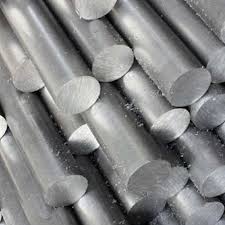 | Non Ferrous Metals Inconel 718 Special Metal is a high-strength nickel-chromium special alloy engineered for extreme temperature, pressure, and corrosive environments. View product → |